This article is part of GCN’s new Amach le Bród (Out with Pride) series, to combat anti-LGBTQ+ misinformation and platform underrepresented voices. The project was funded by the Coimisiún na Meán News Reporting Scheme.
From the punk irreverence of The Mary Wallopers to the high-camp cabaret of SexyTadhg, Irish traditional music is evolving and thriving. In Belfast, an established community of LGBTQ+ musicians and dancers is celebrating its place in trad culture.
Few places have embraced the revival of traditional Irish music quite like Belfast. Earlier this year, Ireland’s only UNESCO City of Music hosted its first Fleadh Cheoil na hÉireann, bringing trad music and dance to streets, pubs and venues across the city.
The eight-day festival attracted a record 1.6 million visitors, with President Catherine Connolly among those attending. It also welcomed members of Loyalist marching bands, who brought their own musical traditions to the celebrations.
While the core of the Fleadh is deeply rooted in traditional Irish culture, the story of Belfast’s trad revival is not simply one of packed venues and record-breaking crowds. Across the city, an established community of LGBTQ+ musicians and dancers has been celebrating its place in traditional music for several years.
In September, a series of events brought several strands of Belfast’s queer trad scene together under the banner of ‘Áit don Aiteacht’ – a queer trad gathering. The programme celebrated queer creativity, participation and community within traditional Irish music, storytelling and dance.
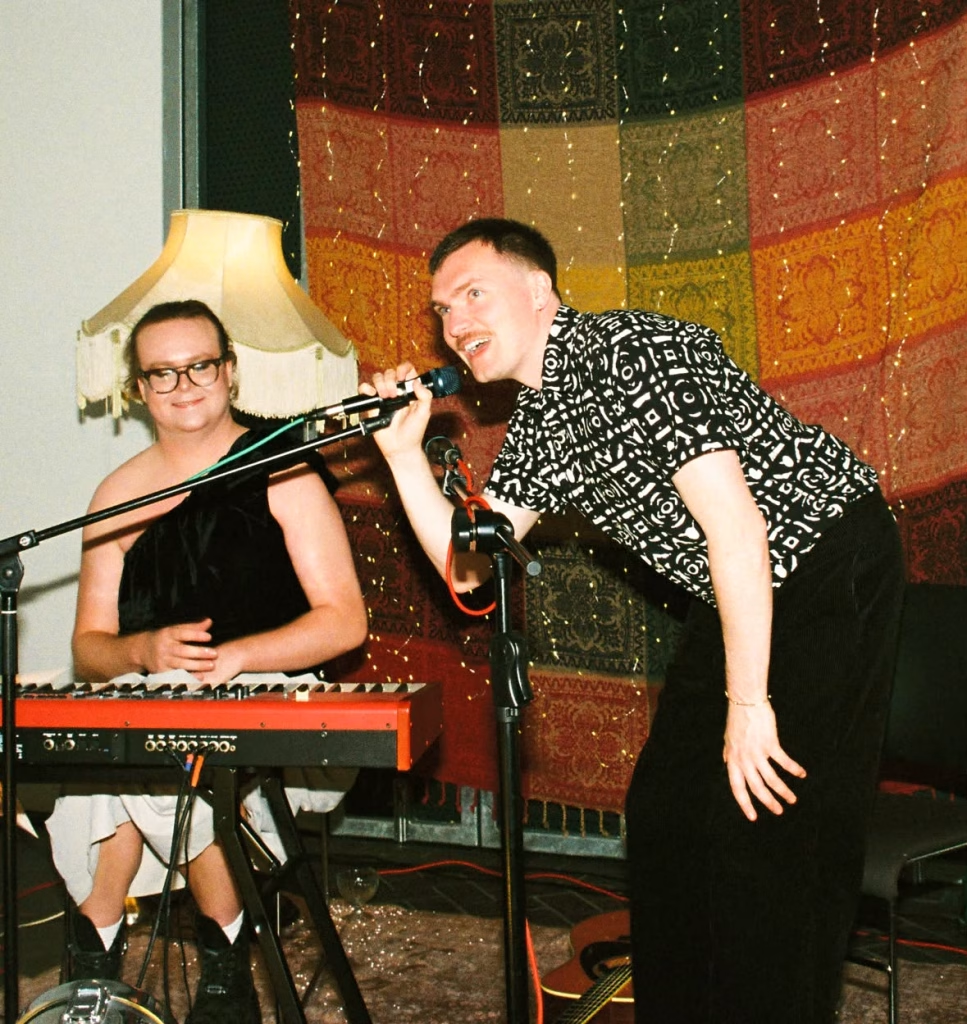
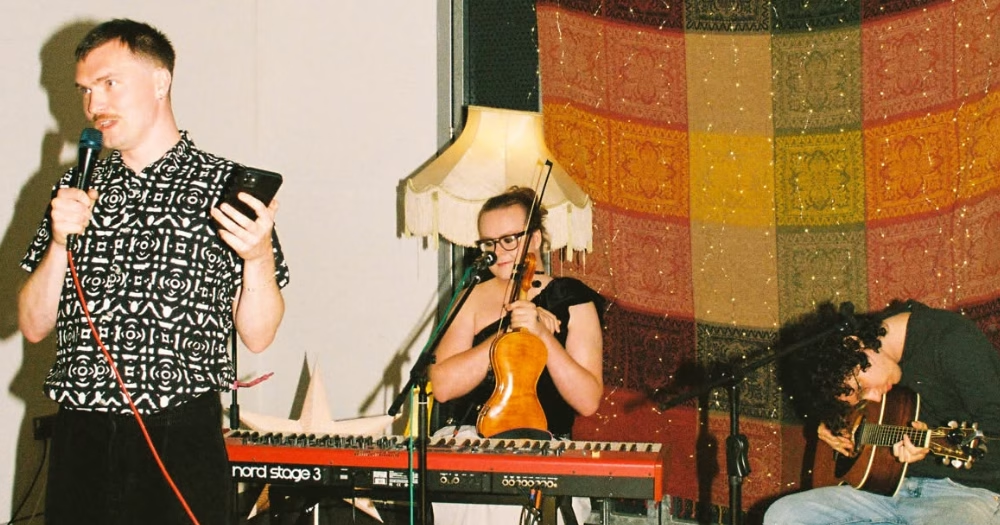
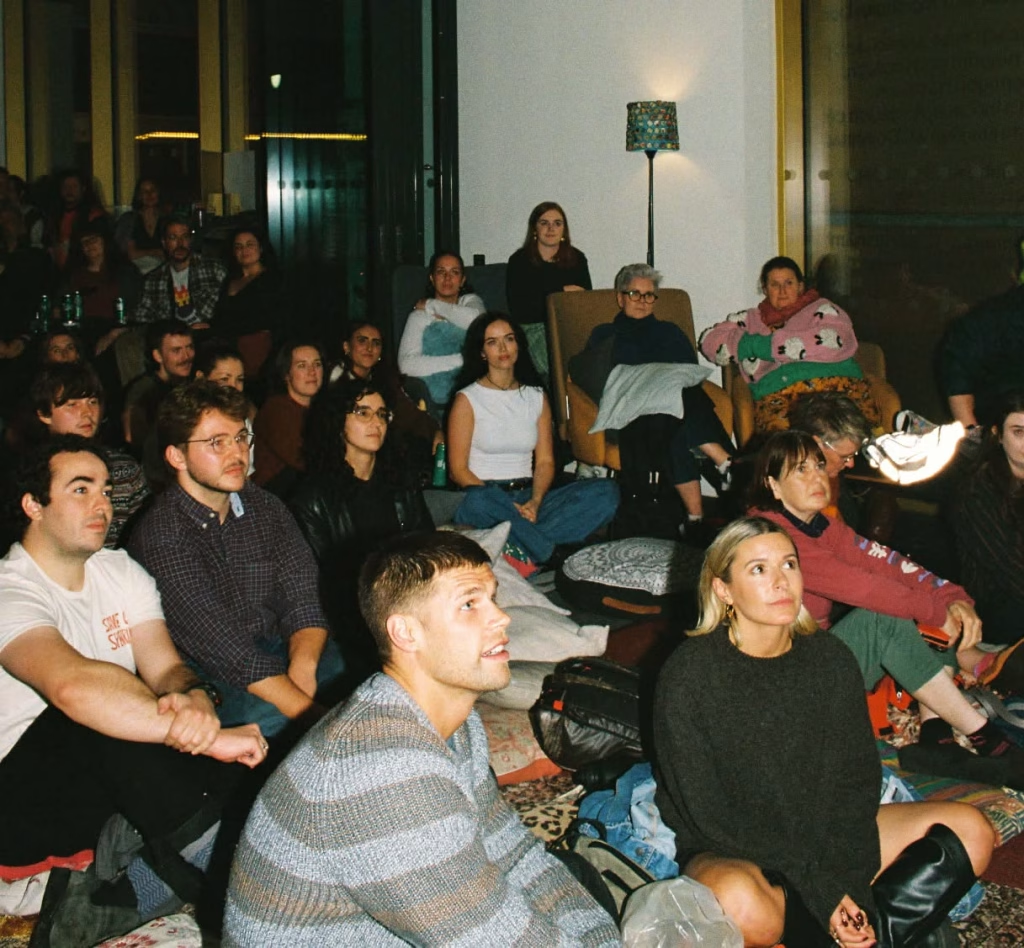
Among the events were an inclusive session by LGBTQ+ trad group Rainbow Reels, an introductory workshop by Queer Set Dancing, and an evening of music and storytelling hosted by the house-concert series Tinteán at Raidió Fáilte, Belfast’s only Irish-language radio station. Tinteán takes its name from the proverb “Níl aon tinteán mar do thinteán féin” (There’s no hearth like your own hearth).
Miceál Mullen is the programme coordinator for BelfastTrad, a cross-community arts charity founded in 1991. He was instrumental in bringing Áit don Aiteacht together, an initiative born out of his ambition to champion “different backgrounds, identities and experiences”.
“There were already people doing lovely work,” he tells GCN. “And this felt like an opportunity to bring that together through BelfastTrad, celebrate it and introduce it to more people.
“There was a personal side to it too. Growing up in South Armagh and coming out when I was already very much part of the trad world, I don’t think I ever imagined being involved in a night like the Tinteán concert. Hearing incredible music and celebrating queer identity in the same room felt quite special. I hoped other people would leave with a bit of that feeling too.”
Founded in 2023 by Mal Farrell, Rainbow Reels hosts regular sessions around Belfast, providing a supportive environment where experienced musicians, beginners and those who simply want to listen can come together. His previous work with The Rainbow Project had given him experience of tackling isolation within the LGBTQ+ community. In that same spirit, he decided to establish the group.
When he attended a public session, Farrell was unable to play the bodhrán he had bought during lockdown. But when an older, well-respected musician offered him a few kind words – saying, “There’s a good beat” – it was all the support he needed.
“Being shown that kindness so early in my playing really encouraged me to keep going,” he tells GCN.
“Irish trad, whether it’s music, songs, dance or storytelling, [has] an amazing way of bringing people together. The amount of people I’ve met through trad is incredible. I feel very much a part of the community, even though that wasn’t my community growing up. I think that’s really important – it’s bringing people together.”
Both Mullen and Farrell agree on the value of dedicated LGBTQ+ spaces, though Mullen’s experiences of living abroad have given him a different perspective.
“Part of me wrestles with the idea of needing separate queer trad spaces,” he explains. “Living in Germany, I experienced music spaces where queerness felt ordinary – I didn’t have to seek out a particular venue to feel comfortable being myself.
“Until belonging stops being something people have to question, these spaces offer something really important: friendship, visibility and the chance to turn up, have a few tunes and be yourself.”
Farrell and Mullen are optimistic about the future of Irish trad in Belfast and across Ireland. Mullen highlights queer céilí events like Sí-bín in Dublin, Ar Scáth a Chéile – a project by Trad is Amach and the Irish Traditional Music Archive highlighting LGBTQ+ traditional artists – as well as the work of choreographer Nic Gareiss and ethnomusicologist Aileen Dillane, both of whom explore queer perspectives in traditional music and dance.
“For me, the strongest traditions are those that grow and change with the people who carry them,” says Mullen. “Society changes, and every generation brings something of its own life to the music, singing and dancing. That’s a huge part of what keeps tradition alive.”
“I’d love to see more queer-oriented sessions,” says Farrell, “and people being respected in their local session regardless of their sexuality or gender identity. We shouldn’t have to hide those parts of ourselves to feel welcomed.
“Queer joy is so important right now, and I feel trad is such a wonderful way to bring out and express that joy.”
Fleadh Cheoil na hÉireann returns to Belfast in August 2027. For more information, visit fleadhcheoil.ie and belfasttrad.com.
© 2026 GCN (Gay Community News). All rights reserved.
Support GCN
GCN is a free, vital resource for Ireland’s LGBTQ+ community since 1988.
GCN is a trading name of National LGBT Federation CLG, a registered charity - Charity Number: 20034580.
GCN relies on the generous support of the community and allies to sustain the crucial work that we do. Producing GCN is costly, and, in an industry which has been hugely impacted by rising costs, we need your support to help sustain and grow this vital resource.
Supporting GCN for as little as €1.99 per month will help us continue our work as Ireland’s free, independent LGBTQ+ media.