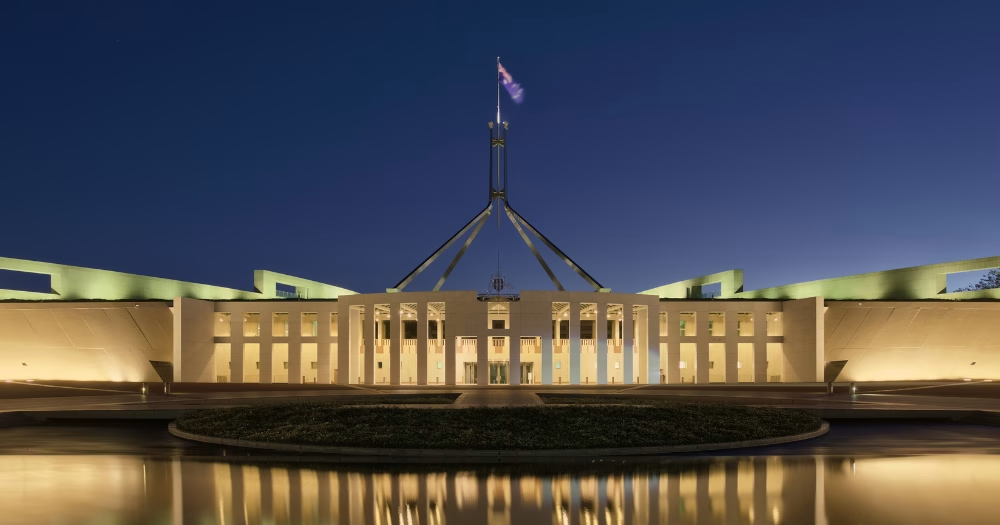
The Australian government issued a formal apology to LGBTQ+ service members and veterans impacted by the Australian Defence Force (ADF)’s discriminatory policies and attitudes. The apology, given by Deputy Prime Minister and Defence Minister Richard Marles on November 25, acknowledged the “shameful chapter in the history of the Australian Defence Force” and the impact it had on the country’s queer veterans.
Australia’s ban on lesbian, gay, and bisexual people from serving in the ADF was lifted in 1992, but Marles noted that “it was a long time before Defence’s culture and attitudes caught up.” The ban on transgender people serving wasn’t lifted until 2010.
“This country did not keep faith with you,” Marle said. “But today, it says sorry”.
“For the surveillance, and the fear you lived under, we are sorry; For the interrogations, and for being asked to betray your mates, we are sorry; For the careers ended and the promises wasted, we are sorry; For discharge papers that told lies about your service, we are sorry; For the years you felt unwelcome amongst your fellow veterans, we are sorry; To the families who never knew why, and to the families who knew and grieved, we are sorry; and for the thirty–four years it has taken us to say so, we are sorry.”
Marle noted that the surveillance and monitoring of those suspected to be gay led to what veterans call the “witch hunts”.
“They stood the same watches, wore the same uniforms, wrote the same letters home. What set them apart was never an obvious difference, it was what we forced them to hide,” Marle said.
The policies that banned queer personnel from service were reconsidered after Chief Petty Officer Anita van Der Meer, who was present at the speech, took her case to the Commission in 1992. She was able to gain the attention of the government’s highest officials, ultimately leading Prime Minister Paul Keating’s Cabinet to end the ban.
The apology comes 34 years after the ban was lifted, and with it comes acknowledgement that it cannot make up for what was done years ago.
“An apology cannot change the past,” Marle said. “But it must change how we confront it. And it must be accompanied by action.”
That action, Marle said, comes in the form of a law passed by Parliament in September that will extinguish homosexual convictions from service records.
Veteran Philip Thompson also joined Merle in issuing the apology.
“Careers were destroyed or cut short, and lives were shattered,” Thompson said. “Let us call this out for exactly what it was. It was wrong. Plain and simple. It was wrong.”
However, many activists and veterans believe that the Australian government should have done more. For starters, Independent MP and former army officer Andrew Wilkie wrote to Prime Minister Anthony Albanese, asking him to be the one to deliver the apology, in line with what was done in the UK and Canada. Instead, Albanese held a press conference at the same time as the apology.
The Sydney Morning Herald reported that fewer than 30 MPs were present for the apology.
Just.Equal spokesperson Rodney Croome spoke to the Star Observer following the apology, advocating for more to be done.
“The apology is important enough to have been delivered by the Prime Minister,” Croome told the Observer. “Like Canada and the UK, Australia should have a scheme for financial redress for those LGBTIQA+ veterans who faced loss of income, loss of reputation, mental health risk and other hardships because of the discrimination and military discharge they experienced.”
While this took place in Canberra, Tasmania’s parliament passed laws banning conversion practices in both of its houses, leaving Western Australia and the Northern Territory as the last jurisdictions that don’t have a ban in place.
The laws, which advocates have claimed to be the “most comprehensive and effective” in the country, provide much-needed protection to Tasmania’s LGBTQ+ population. They ban practices that try to suppress or change someone’s sexual orientation or gender identity, ending the struggle that lasted a decade.
Independent MP Bec Thomas spoke to parliament about the laws, noting that “freedom of religion does not include a right to harm another person”.
“Parental rights do not remove a child’s rights to safety and dignity. Personal autonomy does not require the law to ignore coercion, misinformation, or profound power imbalances,” she said. “A Tasmania where people are not told they are broken because of who they are, a place where shame is not used as a tool of control, a Tasmania where every person can live with dignity and authenticity.”
© 2026 GCN (Gay Community News). All rights reserved.
Support GCN
GCN is a free, vital resource for Ireland’s LGBTQ+ community since 1988.
GCN is a trading name of National LGBT Federation CLG, a registered charity - Charity Number: 20034580.
GCN relies on the generous support of the community and allies to sustain the crucial work that we do. Producing GCN is costly, and, in an industry which has been hugely impacted by rising costs, we need your support to help sustain and grow this vital resource.
Supporting GCN for as little as €1.99 per month will help us continue our work as Ireland’s free, independent LGBTQ+ media.