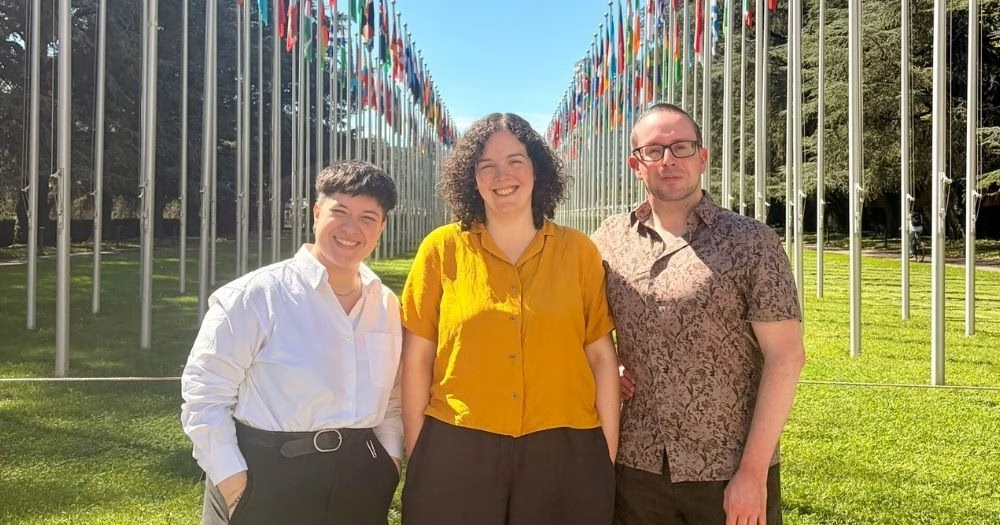
A breakdown of Ireland’s LGBTQ+ rights record was presented to UN member states at a meeting in Geneva on Tuesday, August 25. Representatives from Transgender Equality Network Ireland (TENI), LGBT Ireland and Belong To LGBTQ+ Youth Ireland attended the session on behalf of a wider coalition of 23 community organisations, ahead of the country’s Universal Periodic Review (UPR) in November.
Taking place every four years, the UPR will see Ireland’s human rights record examined by other UN member states. The coalition of LGBTQ+ organisations initially submitted a joint report in April, outlining several key concerns and 33 recommendations for action.
At this week’s meeting, five priority areas were highlighted by the representatives, spanning trans and intersex rights, hate, conversion practices, and gaps between policy and action. They have asked UN member states to consider their asks when making recommendations for Ireland later this year, and the coalition will continue to engage with diplomatic missions until November.
With regard to trans and intersex rights, the organisations expressed a need for Ireland to develop, implement and resource gender-affirming healthcare services based on informed consent, bodily autonomy and international best practice, and to address longstanding gaps in legal gender recognition. They also specifically called for the protection of intersex children from medically unnecessary, irreversible and invasive interventions, and a recognition of the right to bodily integrity in law.
The coalition also called for Ireland to develop and implement a comprehensive, human rights-based Action Plan Against Hate that goes beyond criminal law to address the root causes of the issue. The groups also want the country to finally fulfil its commitment to introduce and enact legislation to ban conversion practices.
Finally, they also highlighted a longstanding “policy rich, action poor” pattern in Ireland, where strategies and commitments are developed but are not fully implemented in practice. The coalition cited the State’s own reviews, which found that only 27% of actions under the LGBTI+ National Youth Strategy and 54% of actions under the first National LGBTI+ Inclusion Strategy were completed.
View this post on Instagram
Speaking about the UPR, Luna Lara Liboni, Research and Policy Manager at TENI, described it as “a unique opportunity to assess where Ireland is on LGBTQI+ rights, hold the State accountable for existing gaps and push for change”.
“What we highlighted in Geneva is the extent to which trans people are currently being failed when trying to access life-saving gender affirming healthcare, as well as the continued barriers to legal gender recognition for entire groups such as non-binary people and youth,” they added.
Tim Hanley, Policy and Research Manager at LGBT Ireland, said, “Ireland has made important progress on LGBTQI+ rights, but significant gaps remain and progress has stagnated in a number of critical areas. Our engagements in Geneva have focused on the urgency and importance of ensuring Ireland’s commitments translate into meaningful improvements in people’s lives.”
Emily Bourke, Policy and Participation Manager at Belong To, commented: “Young LGBTQ+ people are hugely affected by all of the issues that we have raised this week, and action in these areas would open up a brighter future for so many. We are asking States to make recommendations that are concrete, rights-based and capable of driving meaningful change.”
The LGBTQ+ organisations were among a range of other civil society groups attending the UPR pre-session with UN member states this week, who similarly highlighted Ireland’s shortcomings when it comes to human rights and equality.
© 2026 GCN (Gay Community News). All rights reserved.
Support GCN
GCN is a free, vital resource for Ireland’s LGBTQ+ community since 1988.
GCN is a trading name of National LGBT Federation CLG, a registered charity - Charity Number: 20034580.
GCN relies on the generous support of the community and allies to sustain the crucial work that we do. Producing GCN is costly, and, in an industry which has been hugely impacted by rising costs, we need your support to help sustain and grow this vital resource.
Supporting GCN for as little as €1.99 per month will help us continue our work as Ireland’s free, independent LGBTQ+ media.