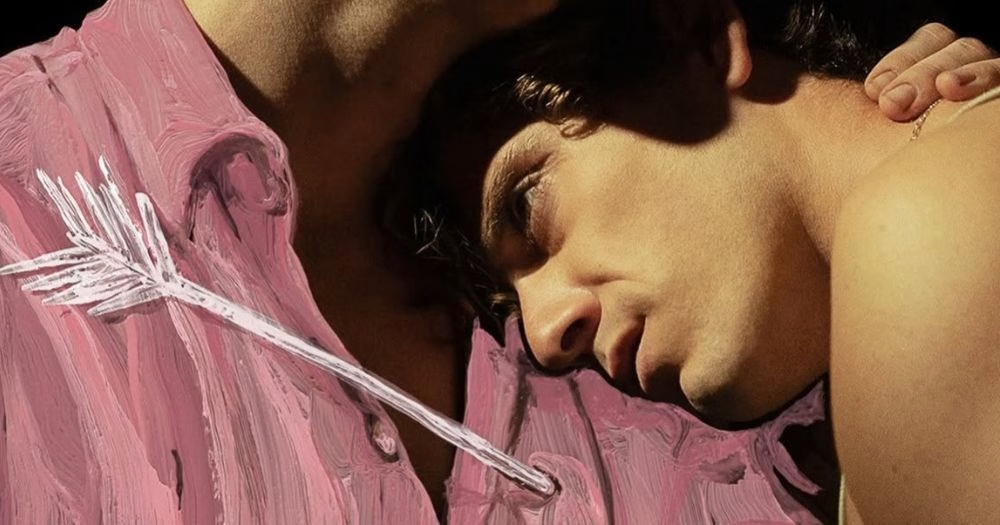
Few films give queer characters the historical, Odyssey-like epic treatment, but the Spanish film La Bola Negra (The Black Ball) does. Directed by Javier Calvo and Javier Ambrossi, collectively known as Los Javis, it spans nearly a century and follows three interconnected stories set in 1932, 1937, and 2017.
The production takes its name from an unfinished play by gay Spanish poet and playwright Federico García Lorca, who was murdered in 1936, soon after the Spanish Civil War began. Like the play, the film opens with a young man from a wealthy Granada family seeking admission to an exclusive casino. Membership is decided by a vote using white and black balls. He is rejected when he receives the black ball.
From there, we meet characters living through different periods of Spanish history, each dealing with their sexuality in circumstances shaped by family, relationships and the attitudes of the time.
In 2017, we follow Alberto, a gay man who receives unexpected information about a grandfather he never knew, and whom his mother refuses to discuss. His curiosity about the man leads him to uncover parts of his family history that have remained hidden for decades.
Federico García Lorca’s unfinished play holds great importance for the characters who grew up in a world where gay lives were rarely represented or spoken about. Their fascination with the unfinished work becomes central. They then become determined to protect it and learn more about it.
After spending time immersed in the 1930s aesthetic of the Spanish Civil War, we are suddenly dropped into a modern world of Grindr and casual hookups, where gay life looks somewhat different.
However, the shifts in time never disrupt the film’s rhythm. The modern scenes are just as engaging as the past.
There is also a sense of eagerness as we learn about Alberto’s grandfather alongside him. We know little more than he does at first, and the film gradually reveals more as his story unfolds.
Visually, La Bola Negra is like watching a work of art, somewhere between The Godfather and Call Me by Your Name. Some scenes are so beautifully composed that you could pause the film, frame the image and hang it on a wall.
The attention to cinematography, costumes, and settings is clear throughout, particularly in the historical sequences.
At times, the film resembles a traditional war epic, though thankfully without many of the genre’s conventions. Its seemingly large scale never distracts from the people we follow, so it always feels intimate.
The cast includes Penélope Cruz and Glenn Close, alongside Miguel Bernardeau, Carlos González and Spanish musician Guitarricadelafuente, who sang an original song for the film.
View this post on Instagram
It is refreshing to watch a production of this size devote so much attention to gay characters.
Historical cinema has given us countless stories of heterosexual romance, family conflict and tragedy against the backdrop of war. Queer people, despite having lived through these same events, have rarely been given such attention.
This seems to be exactly what La Bola Negra addresses, and a line from the film and its trailer puts it perfectly: “This country has too many love stories buried in the fields. We have to scratch the earth so they can emerge.”
Although La Bola Negra is a recent release and moves between three different periods, it feels timeless. At two hours and 30 minutes, the film might initially seem daunting, but it never has a dull moment or an ugly frame.
See it for yourself when it lands in Irish cinemas from Friday, November 6.
© 2026 GCN (Gay Community News). All rights reserved.
Support GCN
GCN is a free, vital resource for Ireland’s LGBTQ+ community since 1988.
GCN is a trading name of National LGBT Federation CLG, a registered charity - Charity Number: 20034580.
GCN relies on the generous support of the community and allies to sustain the crucial work that we do. Producing GCN is costly, and, in an industry which has been hugely impacted by rising costs, we need your support to help sustain and grow this vital resource.
Supporting GCN for as little as €1.99 per month will help us continue our work as Ireland’s free, independent LGBTQ+ media.