Content Warning: Contains descriptions of homophobic violence and murder.
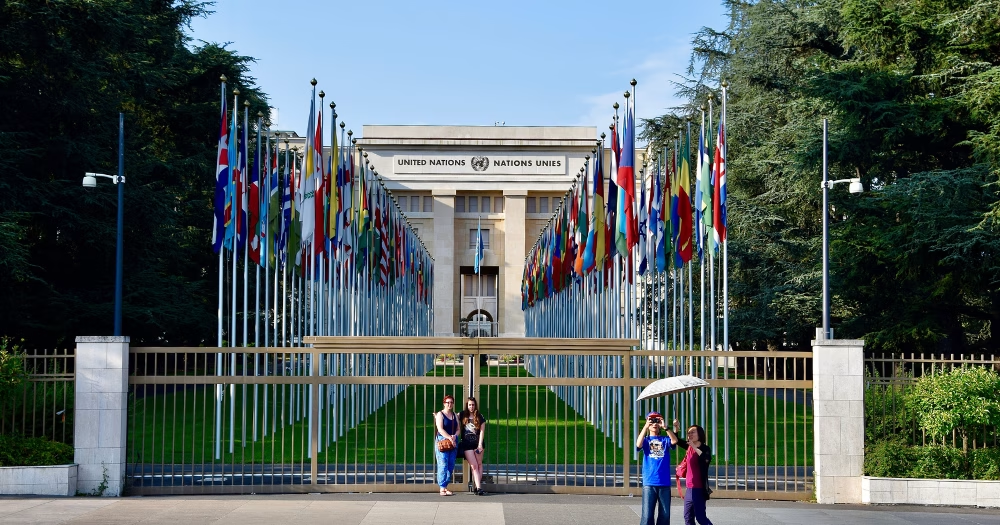
For the first time in recorded voting history, the United States has changed course and joined 68 other countries in voting in favour of a United Nations (UN) amendment to remove LGBTQ+ people from a resolution on unlawful killings.
Every two years, Nordic countries present the resolution to the United Nations General Assembly Third Committee (SOCHUM), asking states to investigate unlawful killings and keep the offenders accountable.
The committee voted on the resolution, which lists groups at a higher risk of targeted violence or murder, on November 13. Among those named are journalists, Indigenous Peoples, religious groups and human rights defenders. Since 2002 and 2012, sexual orientation and gender identity, respectively, have also been included.
The amendment, which would have removed those two groups from the UN resolution, was proposed by Egypt on behalf of members of the Organisation of Islamic Cooperation. Since 2010, groups opposing the inclusion of this language have advocated for removing it.
According to Outright, the United States has historically opposed these amendments, but has made a major shift, supporting them for the first time since the language’s introduction in 2002. In fact, the United States was the leader of the campaign to restore sexual orientation to the resolution in 2010, after the Third Committee had stripped it.
This year also marks a far narrower vote margin than two years ago. The 2026 vote of 74 against to 69 in favour starkly contrasts the 78 to 47 vote on a similar amendment two years ago, highlighting the dangerous shift in attitudes toward LGBTQ+ people across the globe.
Despite the UN amendment failing in the Third Committee, the resolution itself was adopted 131 to zero. The next step is for it to go to a plenary vote in the General Assembly at large in December.
A recent Outright study, Killed for Who They Are: Extrajudicial Executions and Targeted Killings of LGBTIQ People, noted the significant violence against LGBTQ+ people around the world. The organisation, which holds consultative status with the United Nations, advocates for LGBTQ+ rights in UN legislation.
This vote comes just weeks after the study’s release, which identified at least 230 targeted killings of LGBTQ+ people in every region, with victims aged 12 to 77, 18 of whom were children.
It is important to note that these statistics, which were collected from January 2020 to July 2026, are comprised of killings where authorities, civil society, or families have “reason to believe the victim was killed because of their actual or perceived sexual orientation, gender identity, gender expression, or sex characteristics.” There are very few states that keep records of whether a victim was LGBTQ+ — thus, the goal of the study wasn’t to find every case of violence, but to key in on those that stood out.
Some of the deaths detailed in the report were “extraordinarily brutal”. Among the most frequent victims of documented cases were trans women and gay men, but violence is spread across the entire community.
Most countries do not recognise anti-LGBTQ+ violence as a hate crime; out of 193 United Nations member states, only 63 recognise sexual orientation-driven hate crimes, and 40 recognise gender identity-driven hate crimes, further blurring the motive behind some killings. In many cases, it never even appears in the case file for LGBTQ+ people murdered. Additionally, 65 states still criminalise same-sex activity, and eight enforce capital punishment for it.
In the places where it is still criminalised, queer people are more exposed to fatal violence, and their murders are both dismissed and deprioritised, according to the report. Additionally, fear prevents people from reporting these crimes to authorities.
The report also notes that the failure of most states is that they don’t protect LGBTQ+ people from being killed. Under the Universal Declaration of Human Rights and the International Covenant on Civil and Political Rights, states are required to “prevent and prosecute these killings”, meaning “The persistent murder of LGBTIQ people is a failure to meet that duty.”
© 2026 GCN (Gay Community News). All rights reserved.
Support GCN
GCN is a free, vital resource for Ireland’s LGBTQ+ community since 1988.
GCN is a trading name of National LGBT Federation CLG, a registered charity - Charity Number: 20034580.
GCN relies on the generous support of the community and allies to sustain the crucial work that we do. Producing GCN is costly, and, in an industry which has been hugely impacted by rising costs, we need your support to help sustain and grow this vital resource.
Supporting GCN for as little as €1.99 per month will help us continue our work as Ireland’s free, independent LGBTQ+ media.