
This article is part of GCN’s new Amach le Bród (Out with Pride) series, to combat anti-LGBTQ+ misinformation and platform underrepresented voices. The project was funded by the Coimisiún na Meán News Reporting Scheme.
From inequitable care to fear of discrimination, LGBTQ+ people can struggle to find compassion and understanding at the end of their lives. Charlie Hayward spoke with some of the leading voices in inclusive end-of-life care for LGBTQ+ people.
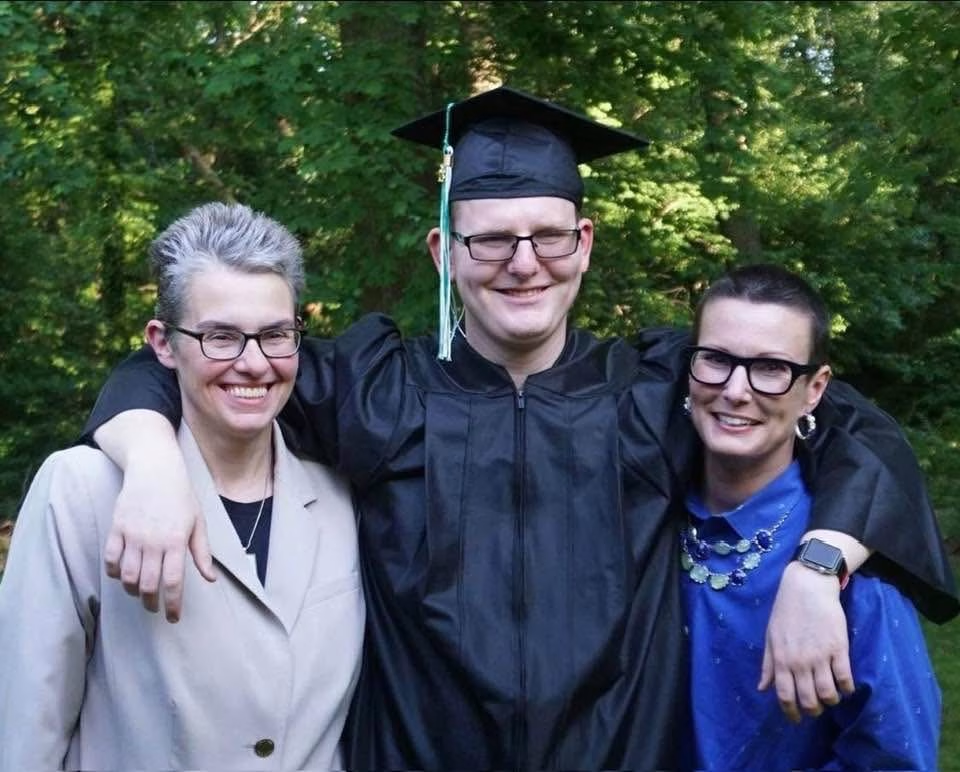
The feeling, said Professor Kimberly D. Acquaviva of her wife’s last days with metastatic ovarian cancer, was one of abject fear. “It wasn’t until the six months between Kathy’s diagnosis and her death that I realised how visceral the fear of being mistreated at the end of life is,” she tells GCN, “and how frightening it is to contemplate the possibility of your loved one receiving care from an organisation that’s unwilling to promise not to mistreat people like you.”
In 2019, Acquaviva, a Fulbright scholar and leading international voice on LGBTQ+-inclusive end-of-life care, learned that her wife, Kathy Brandt, herself a leader and consultant in the hospice industry, had ovarian cancer. The couple spent the next six months documenting their experiences on social media to show what it’s like to “be living while dying.” In 2021, two years after Kathy’s death, The New Yorker released the short documentary Documenting Death, about the couple and their son, Greyson.
Despite both women being experts in their field, it was, Acquaviva admits, the possibility of her wife receiving “shitty hospice care” that led them to care for Kathy at home in her final days, rather than in a hospice. “And shitty hospice care is a very real possibility, especially for us as a lesbian couple,” she adds.
These experiences aren’t isolated. A significant research gap exists around the experiences of LGBTQ+ people receiving end-of-life care, as well as the health inequalities of the LGBTQ+ community more generally, making the scale of the issues faced by dying people difficult to quantify. According to a report from Marie Curie, nearly three-quarters (74%) of LGBTQ+ people felt “not confident that health and social care services provide sensitive end-of-life care for their needs”.
“When someone is living with a serious illness, they shouldn’t have to worry about whether they’re going to be treated with dignity and respect by the healthcare professionals entrusted with their care,” says Acquaviva. “Unfortunately, this is something many LGBTQ+ people worry about, and with good reason.”
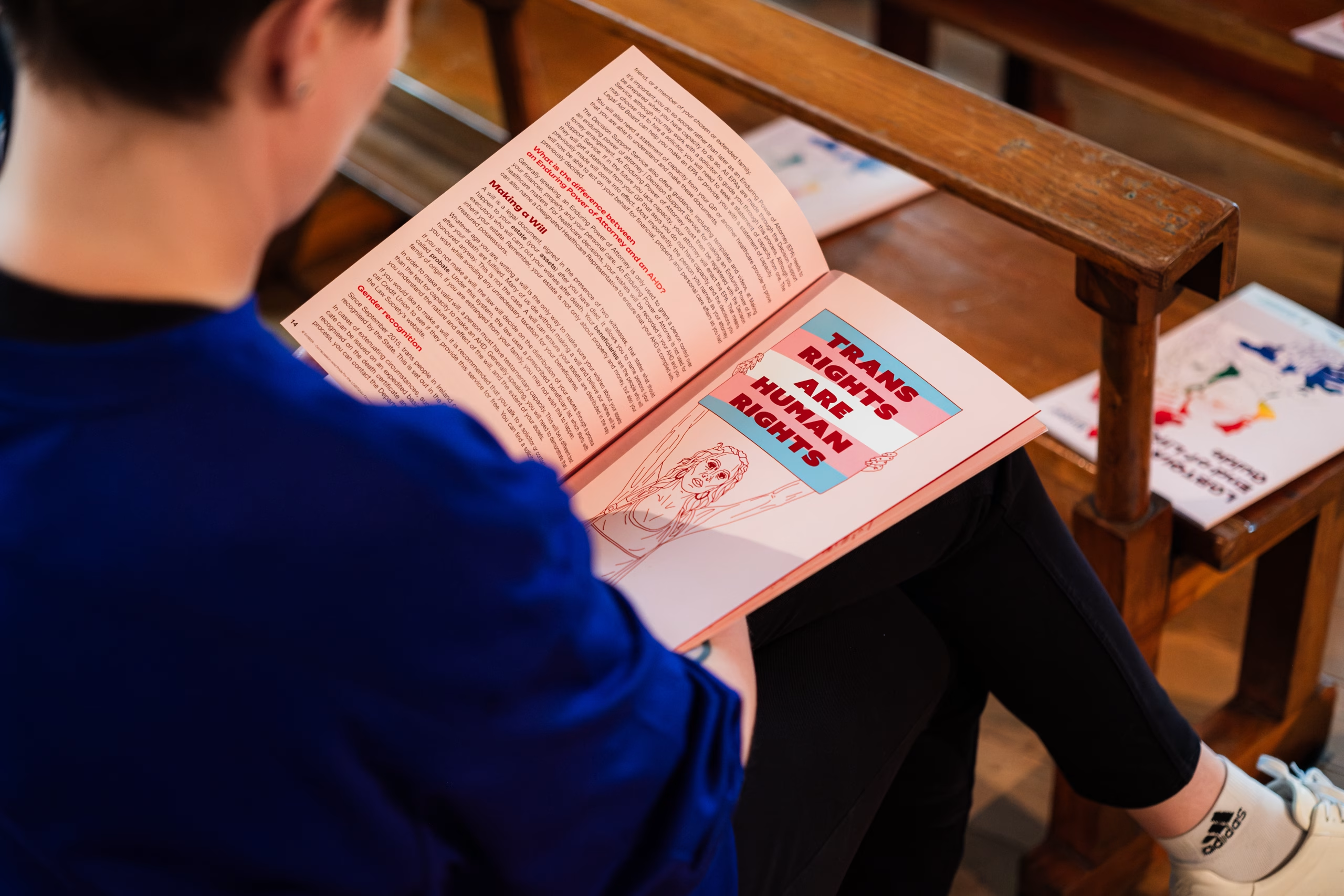
Previous negative encounters with healthcare professionals can shape whether an LGBTQ+ person feels safe enough to seek end-of-life care at all. In 2024, a new guide was launched in response to LGBTQ+-specific anxieties around accessing and receiving end-of-life care. Inspired by the work of a volunteer group that formed out of several “Death Cafés” held around Ireland in 2022, EMBER was jointly developed by All Ireland Institute of Hospice and Palliative Care, Irish Hospice Foundation and LGBT Ireland. (A Death Café is a space for people to come together to talk openly about grief, bereavement, death and dying.)
James O’Hagan is the LGBT Champions Training Programme Coordinator at LGBT Ireland, and one of the architects behind EMBER. He explains that EMBER was designed to provide an “open forum for members of our community to talk to healthcare professionals” about their concerns.
“In the lead-up to that, we weren’t certain whether there would be any appetite for it,” he tells me. “We were anxious to know what would come. We’d seen some interest through conversations with different people, but we weren’t sure. But actually on the day when it did arrive, there was huge enthusiasm for it. We just fully packed out the room.”
Many of those conversations revolved around whether the participant’s identities would be respected if they were to need more intensive care, or if they were to “move into nursing homes, have home care, about whether their chosen families would be respected, whether their wishes would be fulfilled, [whether] they could rely on the care that currently exists to actually respect them, or whether they may experience discrimination or marginalisation,” says O’Hagan.
EMBER offers practical advice in planning for illness, loss of capacity, end-of-life care, and death. Its particular focus is on issues that disproportionately affect LGBTQ+ people: familial estrangement, chosen family, gender identity, and ensuring that trusted people (rather than a person’s family of origin) can advocate for the wishes of the dying. The guide was also intended as a resource for health and social care professionals to help them provide more equitable palliative and end-of-life care.
Looking ahead, I ask O’Hagan what it would take to make end-of-life care for LGBTQ+ people truly inclusive and equitable. “It needs to not be just seen as a nice-to-have or an add-on,” he says. “And this goes not just for the LGBT community, but for all minority communities. We need to see the health services, both North and South [of the border], stepping up and understanding that this isn’t a piece of jewellery that can be put on and taken off.
“Our community exists across the board. And wherever we go, we need to be sure that we are going to get care that respects our identity and understands our needs.”
Seven years after her wife’s death, Acquaviva remains thankful that they made the decision to document the last six months of Kathy’s life. “Kathy was passionate about educating people about end-of-life care, so much so that, despite being a very private person by nature, she was energised by the experience of using the final months of her life to educate people about dying.”
In light of her extensive experience, I ask her what more can be done to make LGBTQ+ patients, their partners and families feel safe and respected. She says: “Genuinely inclusive end-of-life care recognises and affirms every patient and family’s inherent worth as human beings deserving care and compassion. LGBTQ+ patients and families shouldn’t have to ‘come out’ as LGBTQ+ to their healthcare professionals in order to have their name, pronouns, gender identity, gender expression, relationships, and family configuration respected.”
For Acquaviva, change must begin at the source. “I hope people in palliative care will take ten minutes out of their day to watch The New Yorker documentary and reflect on whether LGBTQ+ patients and families would be treated with dignity and respect by every member of the organisation where they work.
“If the answer to that question is ‘no,’ do something about it.”

© 2026 GCN (Gay Community News). All rights reserved.
Support GCN
GCN is a free, vital resource for Ireland’s LGBTQ+ community since 1988.
GCN is a trading name of National LGBT Federation CLG, a registered charity - Charity Number: 20034580.
GCN relies on the generous support of the community and allies to sustain the crucial work that we do. Producing GCN is costly, and, in an industry which has been hugely impacted by rising costs, we need your support to help sustain and grow this vital resource.
Supporting GCN for as little as €1.99 per month will help us continue our work as Ireland’s free, independent LGBTQ+ media.