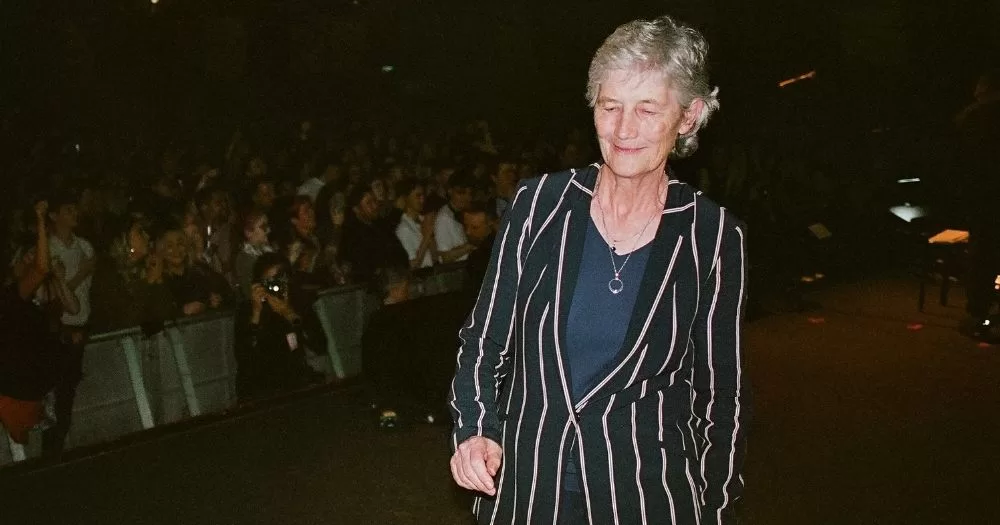
After the united left secured a significant victory in the presidential election of Catherine Connolly, Kelly Earley caught up with a number of people from the campaign to parse out their activist goals in Issue 391 of GCN.
Within days of moving into Áras an Uachtaráin, President Catherine Connolly implemented Gaeilge as the working language of the presidency. Within a fortnight of inauguration, the lifelong social justice campaigner acknowledged the ten-year anniversary of the Gender Recognition Act in her Transgender Day of Remembrance statement as a testament to the courage and perseverance of transgender people in Ireland.
It was a strong start for a President who campaigned on the promise to be ‘Guth na nDaoine’ (voice of the people), but the campaign was not without its surprises. The 2025 presidential election will go down in history for Connolly’s Maradona moment, along with the coordinated push for unity among Ireland’s left-leaning opposition parties. In the weeks that followed the inauguration, media pundits all seemed to ask the same question: “Can it last?”
Time will tell if the left’s united front will endure until the next general election. What we do know for sure, is that our latest election completely transformed how activists, trade unions and political parties can work to cultivate consensus. We spoke to three people involved in the campaign to glean their greatest learnings and their expectations for the 2026 political agenda.
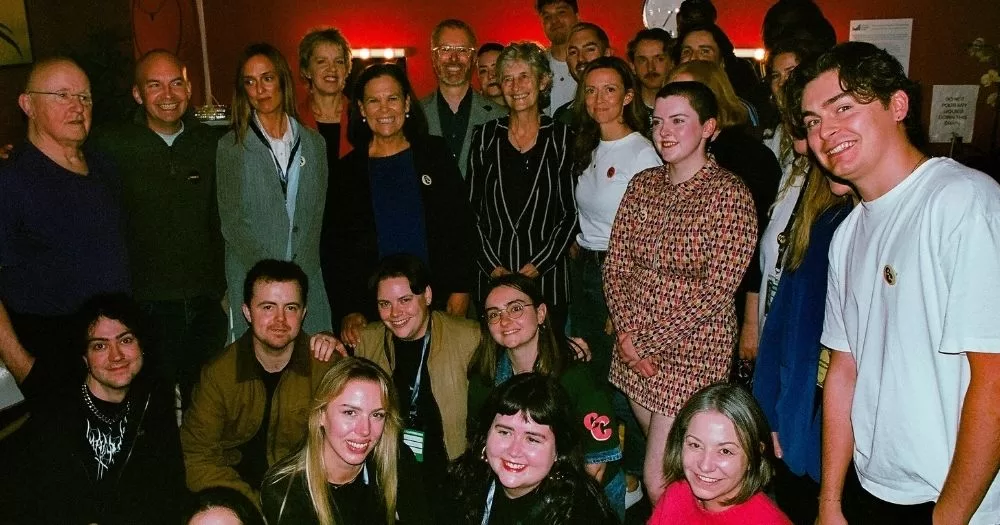
Digital campaigning
Activist and software engineer Katie Chapman threw herself into the campaign after seeing a call-out for technical help. One of the key tools for the campaign was a platform called Solidarity.Tech, which is used by trade unions and grassroots organisers. This centralised database allowed volunteers to contact anyone who self-identified with the skills needed, meaning they could quickly track down artists, canvassers, leafletters, and writers.
“The goal was to try and increase mobilisation within the campaign. The organising model we were using was very much about trying to get people out, both locally and on social media,” Chapman explained. Looking to the future, she expects that tech will continue to serve as the basis of activism, particularly for people who are new to the space.
During the campaign, Chapman built a WhatsApp- based platform that enabled campaigners to start one-on-one conversations with people who signed up to volunteer, at scale. This lowered the barrier to entry, by connecting “super organisers” with less experienced activists to pull more people in. This tech helped to forge meaningful relationships between volunteers, activating “people who otherwise, at best, would have been sideline participants.”
Chapman sees huge potential for this type of work beyond the presidential campaign. “The more people we have active in our communities, the more likely we are to get good outcomes for our communities – whether that’s for people in IPAS accommodation, whether that’s the LGBTQ+ community, or whether that’s working-class communities trying to organise to get a community centre.”
Gaelige as a unifying force
Food writer and content creator Sian Conway found herself involved in the social media side of Connolly’s campaign, conducting interviews and vox pops at the campaign’s many events for young people. Her interest in the campaign began, in part, due to her love of the Irish language and her recent efforts to strengthen her grasp on Gaeilge. Conway was immediately taken by Connolly’s reverence for the Irish language, though the President’s other traits also inspired her.
“There’s a vulnerability to her that you can feel. She seems like a normal person,” Conway told GCN. “So many people in the Dáil who’ve shaped our futures, they act like aliens in human costumes. They don’t know how to relate to the lived experience of everyday people in Ireland.” Conway noted that the success of Connolly’s campaigning served as a boon to Ireland’s youth, who were burned particularly badly in the last general election.
As someone whose life has been intertwined with social media for many years, Conway believes that online content sealed the deal for many people watching the campaign from afar. Social media enabled the candidate’s supporters to relay clear, concise messages and acquaint newcomers with Connolly’s political record. “But sure, then the clip surfaced of her with the football,” Conway laughed. From that point onward, there seemed to be no turning back .
For Conway, the role of Gaeilge in the campaign was another major decider. She noted that the campaign coincided with 2025’s massive show of support for the Irish language movement, where 25,000 people took to the streets for CEARTA, the first national march of its kind for the Gaeltacht and the Irish language in over a decade.
Inclusive organising
Trade unionist Maeve Richardson naturally gravitated to Connolly as a result of their shared views on Palestine and workers’ rights. Richardson’s experience within the campaign reflected the efficient centralisation of resources mentioned by Chapman. The campaign reached out to tap into her digital organising skillset. It was a relief to Richardson, who was worried that she wouldn’t have been able to throw herself into in-person organising, as a result of experiencing long Covid. The campaign benefitted from Richardson’s expertise and skills in data analysis, while she worked remotely and joined on a canvass or two along the way.
“If I had to be a spectator on the sidelines, it would have killed me,” Richardson said. “So it was great being involved in that way and I can’t stress how great the campaign team was to get involved with. Catherine had spoken up over the years about disability rights and chronic illnesses, so being in my health condition and being able to support her was huge.”
Richardson happened to be one of the onlookers in the north inner city, the day that the viral keepy uppies came to be.
When asked about her highlights from the campaign, this moment resonated most with Richardson: “And not just for the keepy uppies. It was the fact we were in Mud Island in Ballybough. All of the Dublin Central TDs were there along with the councillors and they were all just laughing and joking and talking to everyone about Catherine. There’s a perception in the media that these people don’t talk to each other, while in reality, that’s not it. It was stronger because they were all behind the same cause.”
The agenda for 2026
Looking at the year ahead, all three campaigners had different priorities and areas of interest, which overlapped in many ways. Chapman remarked: “I’d really like to see reform of trans healthcare in the HSE. Trans Healthcare Action, Transgress the NGS, TENI and other community organisations are pushing towards that, but it’s just been slow going. With more grassroots organising, I think we can put it on the agenda.”
Conway noted that many groups feel entirely overlooked by the current Government. “There’s no consideration for queer people in Ireland, the immigrant population, renters, people on low income, Gaeilgeoirs, and women as always. None of that is on the agenda.” She added: “I really want to see more mobilisation for the immigrant population of Ireland and more protections.”
Richardson sees the housing crisis as the major issue, due to its knock-on effects. “We need public housing, and I back calls for a state construction company,” she added. “Clearly the private sector is not aligning with what our housing needs are.”
As she reflected on the issue further, she highlighted how the lack of housing supply impacts queer people in particular, who often feel unsafe in many rental scenarios, but also cannot always be themselves in the family home. “The housing crisis steals from LGBTQ+ people’s futures, because they’re spending what should be their savings on rented accommodation.”
GCN’s wonderful Christmas Raffle is back! To be in with a chance of winning some fantastic prizes while also supporting GCN, buy a raffle ticket from as little as €5 at this link.
© 2025 GCN (Gay Community News). All rights reserved.
Support GCN
GCN is a free, vital resource for Ireland’s LGBTQ+ community since 1988.
GCN is a trading name of National LGBT Federation CLG, a registered charity - Charity Number: 20034580.
GCN relies on the generous support of the community and allies to sustain the crucial work that we do. Producing GCN is costly, and, in an industry which has been hugely impacted by rising costs, we need your support to help sustain and grow this vital resource.
Supporting GCN for as little as €1.99 per month will help us continue our work as Ireland’s free, independent LGBTQ+ media.