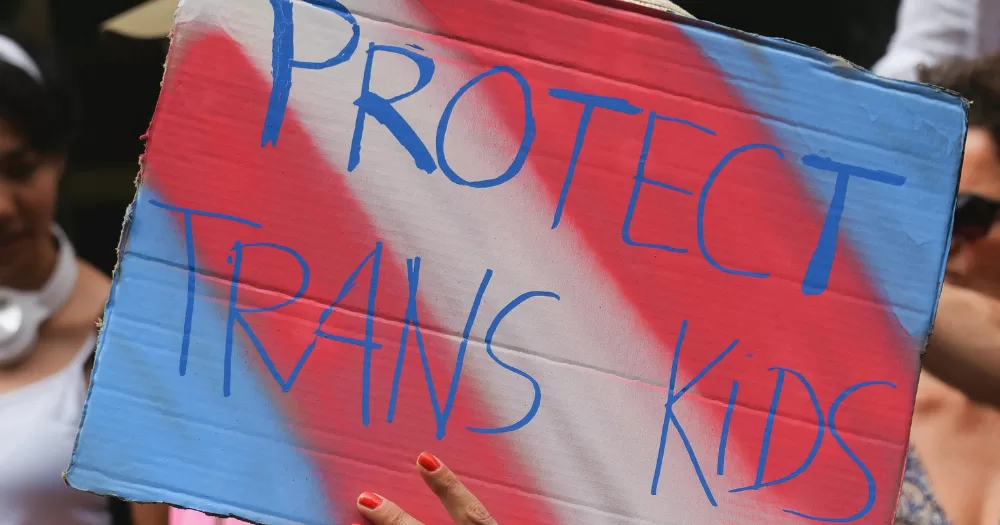
A £10 million independent study commissioned by the NHS to trial the use of puberty blockers for trans young people has come under heavy criticism from trans rights advocates and international health organisations. The PATHWAYS trial, led by researchers at King’s College London (KCL), will assess the physical and psychosocial well-being of trans adolescents who take puberty-suppressing medication.
The study was commissioned following the UK government’s decision to indefinitely extend a ban on puberty blockers for under-18s. The treatment, which has long been used for decades in cisgender children experiencing precocious puberty, can help alleviate gender dysphoria by pausing puberty development. There is no explicit evidence suggesting that puberty blockers are inherently harmful.
Speaking to the British Medical Journal (BMJ), TransActual healthcare director Chay Brown criticised the PATHWAYS trial’s design, arguing that it places undue burdens on young participants. Under the trial’s methodology, under-18s would be required to undergo hours of medical and psychological assessments, which critics have described as invasive.
“The trial’s methodology is inherently coercive and inappropriate in what it is measuring as though it is designed to reach a negative conclusion,” Brown said. “Gender related healthcare for young people has become a mess, treating patients with suspicion and delaying and banning treatments based on treating being trans as a risk rather than natural human variation.”
Concerns have also been raised by major international medical organisations. The World Professional Association for Transgender Health (WPATH), alongside its European (EPATH) and US (USPATH) counterparts, warned that the trial may violate ethical standards around voluntary informed consent, as participation would currently be the only route for young people to access puberty blockers through public healthcare.“Ethical research must be voluntary, clinically sound, and designed with the well-being of participants at its core,” the organisations said in a joint statement last week.
Criticism of the trial has come from across the political spectrum. ‘Gender-critical’ campaigners have also opposed PATHWAYS, arguing that the study should be abandoned entirely due to the belief that puberty blockers are inherently harmful.
Brown argued that puberty blockers would be seen as effective and uncontroversial “if they weren’t associated with being trans”. He added: “It is ironic to see the same people who championed the discredited Cass Review now turn on the clear recommendations of that review for further research, yet another sign of how deep anti-trans sentiment has sunk its claws into UK politics.”
© 2026 GCN (Gay Community News). All rights reserved.
Support GCN
GCN is a free, vital resource for Ireland’s LGBTQ+ community since 1988.
GCN is a trading name of National LGBT Federation CLG, a registered charity - Charity Number: 20034580.
GCN relies on the generous support of the community and allies to sustain the crucial work that we do. Producing GCN is costly, and, in an industry which has been hugely impacted by rising costs, we need your support to help sustain and grow this vital resource.
Supporting GCN for as little as €1.99 per month will help us continue our work as Ireland’s free, independent LGBTQ+ media.