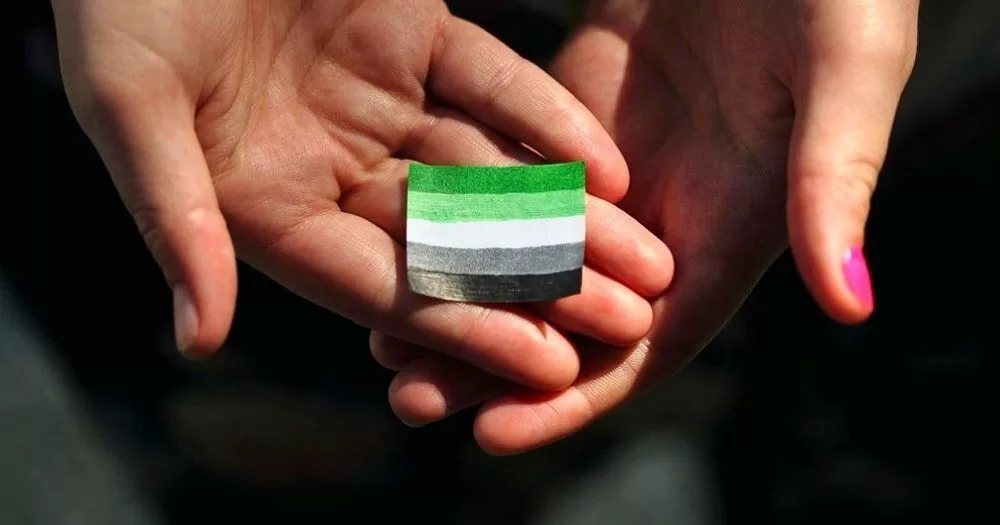
From movies and TV to songs, romance is in every aspect of our culture, and so is the assumption that every single human being desires romance. Aromanticism, however, challenges this assumption, showing how there is no one way to experience love and relationships.
Every year, the first full week after Valentine’s Day marks Aromantic Spectrum Awareness Week. At a time when the whole world is focused on romantic love, it is important to analyse how such focus impacts people who are on the aromantic spectrum.
To have a better understanding, let’s look at the concept of “amatonormativity”. Amatonormativity describes all the social norms that create pressures for people to engage in romantic relationships and that privilege such relationships over any other type. It promotes the sacrifice of other forms of relationships, such as friendships, to romantic ones.
While there is nothing wrong with romance in itself, it is the pressure put on people to find a monogamous romantic partner that is problematic. People are socialised to believe they should find their soulmate, marry them and have a family together. Amatonormativity thus completely erases the experience of people who are aromantic.
Aromanticism describes all people who experience little to no romantic attraction. Aromantic is an umbrella term, as there is no singular experience of aromanticism. People who are on the aromantic spectrum can have a variety of experiences, including not feeling romantic attraction at all, feeling romantic attraction occasionally, or feeling varying levels of romantic attraction at different times or in certain circumstances.
View this post on Instagram
The queer community as a whole is well-known for challenging the limited ways we are given to describe love and attraction, and the aromantic community is bringing this a step further. Their use of language is radical and nuanced: it creates spaces for experiences that have been marginalised and, at the same time, it allows for ambiguity, fluidity and inclusivity.
For example, a grayromantic person is someone who feels low amounts of romantic attraction or rarely feels any. This word may also describe people who are not sure if they experience romantic attraction.
A demiromantic person is someone who only feels romantic attraction after they’ve formed a deep emotional connection with people. Conversely, a frayromantic individual only feels romantic attraction to people with whom they do not have an emotional bond, with the attraction fading once the bond is established.
View this post on Instagram
These are far from the only experiences that people on the aromantic spectrum have. It is also important to remember that aromanticism and asexuality do not go hand in hand. Romantic orientation and sexual orientation are separate, and aromantic people can experience sexual attraction and identify as straight, gay, lesbian, bi or any other.
The main misconception that aromantic people try to dispel is that you need romantic love to have a fulfilling life. Aromantic people have loving relationships with friends, family and platonic partners that are just as meaningful as other people’s romantic ones.
Moreover, some aromantic people choose to enter queer platonic partnerships, which are generally described as platonic relationships with a deeper level of commitment than friendships. People in queer platonic partnerships often live together or share financial responsibilities.
Check out this article to read about the experiences of aromantic and asexual people. To read more about queer platonic partnerships, see this article.
© 2026 GCN (Gay Community News). All rights reserved.
Support GCN
GCN is a free, vital resource for Ireland’s LGBTQ+ community since 1988.
GCN is a trading name of National LGBT Federation CLG, a registered charity - Charity Number: 20034580.
GCN relies on the generous support of the community and allies to sustain the crucial work that we do. Producing GCN is costly, and, in an industry which has been hugely impacted by rising costs, we need your support to help sustain and grow this vital resource.
Supporting GCN for as little as €1.99 per month will help us continue our work as Ireland’s free, independent LGBTQ+ media.