During times when queer support was scarce, the media was saturated with pioneering representation; one notable example was LGBTQ+ romance in video games, particularly RPGs.
RPGs, often an abbreviation for Role-Playing Games, as well as simulation games, are genres in which it’s very common to find romantic partners among the game’s Non-Playable Characters (NPCs), because these types of games all rely on player choice and can be played in numerous ways.
One of the earliest introductions of same-sex pairings came in the form of 1998’s Fallout 2, a game about a post-nuclear world. Some fans considered this representation to be one-dimensional, but even if it was flawed, it was still an important step.
Five years later, Star Wars: Knights of the Old Republic featured a lesbian Jedi Knight character called Juhani as a love interest, marking another breakthrough in gaming.
Fable was launched in 2004 and became the first of many titles in the Fable series, pioneering inclusivity in gaming romances. Fable is a fantasy role-playing game series comprising around a dozen titles. It is set in the fictional nation of Albion and is one of the first RPGs with extensive open-world gameplay.
Fable was followed by many different titles, including Fable 2, which introduced sexuality to NPC cards, and Fable 3, before Lionhead Studios collapsed in 2016. The series was revived in 2020 by Playground Games.
The next franchise came with a whirlwind of excitement, with Dragon Age: Origins offering bisexual NPCs, which meant you could pursue any romantic interest as any gender in this fantasy role-playing game centred around the fictional continent of Thedas and follows many different inhabitants, including elves, gnomes, humans and others.
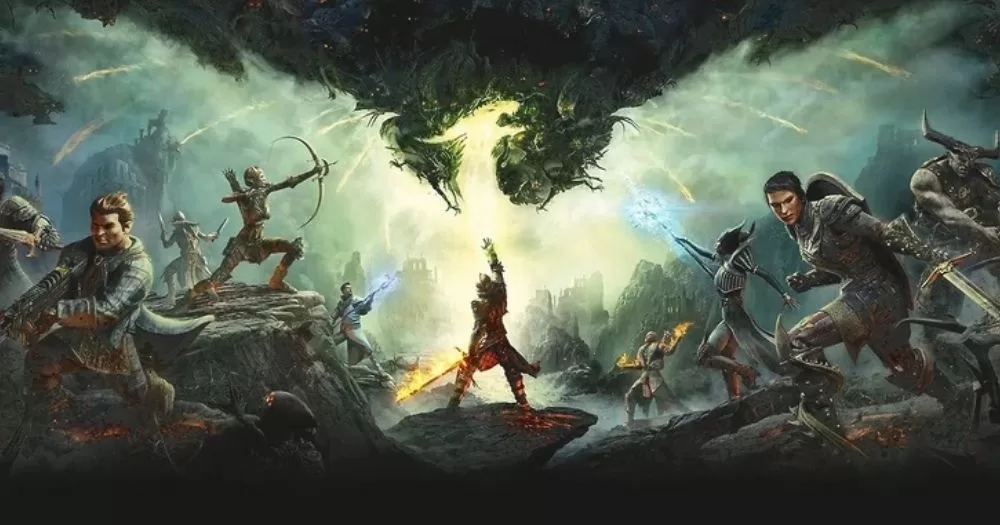
Dragon Age followed with two more games, the second of the two, was Dragon Age: Inquisition. This game brimmed with representation, from a notably trans character, to a beautiful view on LGBTQ+ romance in video games. As an Inquisitor, romances were handpicked for you based on who you decided to be, meaning your origin and gender mattered; this was an important step in the classical ‘you can have all’ approach of games with bisexuality. A female elf could romance an elf-hating elven girl, Sera, who’s a lesbian, and features a nuanced romance centred on self-acceptance.
Another character, Dorian, who is a gay mage hailing from Tevinter, has a dark past of homophobia where his father threatened and even tried to make Dorian straight through magic. These are the kinds of backstories love interests deserve to have, backstories that some of those playing can feel relatable in a world of non-acceptance. Dorian can only be romanced by a male Inquisitor and it brings with it a beautiful love story.
One of the most renowned and still the most common RPGs featuring LGBTQ+ pairings is Baldur’s Gate 3, a D&D-inspired game released in 2023 that remains one of the most iconic portrayals of LGBTQ+ romance in RPG gameplay.
You can romance characters as your own unique Tav, who can also be transgender, or choose to play as an existing member of your group. Since the game focuses on choice, each romance is nuanced and distinctive, making the queer romance experience even more special.
2023 was the year of RPGs, as another post-cyberware and AI-filled world of Cyberpunk 2077 introduced LGBTQ+ romances that depended on the gender you chose for your V. While some fans were annoyed that they couldn’t romance a character who was straight, it marked an important moment in gaming, and it differentiates from other games in history.
Dragon Age: The Veilguard, the fourth instalment in the Dragon Age series, features eight romanceable characters, all of whom are pansexual, and allows you to create a non-binary player character within the game. The love interests can also form relationships with one another if you focus on a specific romance.
However, with the rise of these games, it became clear that some gaming franchises were opting for the ‘bi way out’, portraying gay romance as similar to straight romance by making every character bisexual, pansexual, or romanceable by the main character.
Imposing queer relationships solely for inclusivity often lacks the depth to capture the nuances of the LGBTQ+ community and romance in video games genuinely.
Games like Dragon Age: Inquisition, Cyberpunk, or others that feature romances based on the gender of your character already provide a worthwhile, inclusive experience and do not diminish bisexuality as a simple way to promote inclusivity.
It’s always important to remember that not every character will want to date your protagonist, as people have different sexualities, regardless of whether our character is the ‘real deal’. This means a gay male character won’t date a woman, which actually makes the story more inclusive; it respects sexuality and prioritises a love story with greater significance. If characters have unique sexualities and backgrounds that influence their choices, whether good or bad, it fosters greater acceptance of all kinds of people. Moreover, it also feels more genuine.
While exploring romance through queer RPG characters, we come to understand and love them in a completely different way, especially when the romance is not merely based on friendship or forced to include same-sex pairings. We can even relate to these characters ourselves, particularly when they overcome nuanced backgrounds amid times of hatred.
We hope that, in the future, games will better anticipate their impact on the queer community and develop nuanced queer characters defined by their queerness, not reduced to a trope, while allowing us to experience epic romances born of acceptance.
The breakthrough of LGBTQ+ romances in these games is significant, as it demonstrates that romantic interactions in games can resonate with players’ sexualities and further amplify queer voices in media. The representations we’ve had so far haven’t always been perfect, but they’ve paved the way for more to come.
© 2026 GCN (Gay Community News). All rights reserved.
Support GCN
GCN is a free, vital resource for Ireland’s LGBTQ+ community since 1988.
GCN is a trading name of National LGBT Federation CLG, a registered charity - Charity Number: 20034580.
GCN relies on the generous support of the community and allies to sustain the crucial work that we do. Producing GCN is costly, and, in an industry which has been hugely impacted by rising costs, we need your support to help sustain and grow this vital resource.
Supporting GCN for as little as €1.99 per month will help us continue our work as Ireland’s free, independent LGBTQ+ media.