With the recent LGBTQ+ film Leviticus receiving a 93% on Rotten Tomatoes, it’s clear that there is a massive hunger for horror in the queer community. But what is it about the genre that draws so many in?
Horror has always been preoccupied with what society is too uncomfortable to confront, and still today queerness remains one of those topics. Even when the representation isn’t explicit, those who identify as LGBTQ+ often see themselves in characters who do not conform to society’s standards.
Frankenstein by Mary Shelley is a prime example of this, as its titular monster is ostracised and hated for existing outside of the ‘norm’, which reflects the experiences of many queer people. In 1931, the iconic Universal adaptation of Frankenstein was directed by James Whale, who was openly gay at a time when the Hays Code prohibited any depiction of homosexuality in film.
Furthermore, in Susan Stryker’s essay, ‘My Words to Victor Frankenstein above the Village of Chamounix: Performing Transgender Rage’, she talks about how she personally connects with Frankenstein’s monster as a trans woman. She explains, “Like the monster, I am too often perceived as less than fully human due to the means of my embodiment; like the monster’s as well, my exclusion from human community fuels a deep and abiding rage in me that I, like the monster, direct against the conditions in which I must struggle to exist”.
Therefore, horror has been a perfect medium for exploring the trauma of marginalisation, whether directly or indirectly, and that is a part of its appeal within the community.
Camp is also a big part of queer culture, and there is no shortage of it in horror. The genre isn’t all serious and dreary; just look at classic slasher films like A Nightmare on Elm Street, with its tongue-in-cheek humour and dramatic villain.
This is especially true for its sequel A Nightmare on Elm Street: Freddy’s Revenge, which has been claimed by the LGBTQ+ community as an allegory for the AIDS epidemic. In an interview with Out, when asked about the queer subtext in the film, Freddy Krueger actor Robert Englund confirmed: “We knew what was going on”.
Hence, despite its gloomy reputation, horror often unashamedly embraces campiness in a way that often resonates with queer audiences.
Along with delving into psychological fears, the genre also frequently explores fears around the body that can connect with the experiences of trans and gender non-conforming individuals.
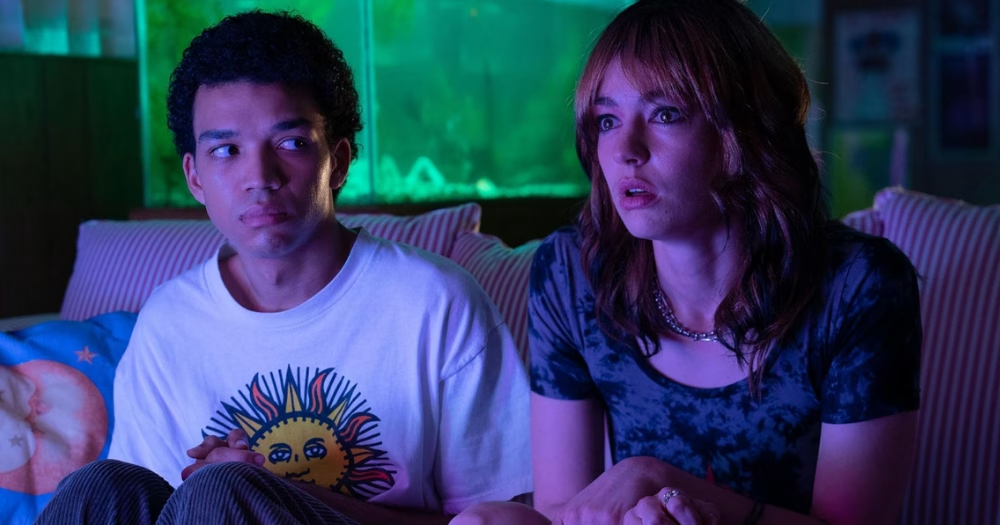
Reflecting this, Jane Schoeburn is a non-binary trans-feminine person who directed the 2024 LGBTQ+ horror film, I Saw the TV Glow. The film revolves around a boy named Owen who becomes obsessed with a strange TV show and gradually discovers that his reality may not be what it seems.
Schoeburn commented in an interview with Little White Lies that “TV Glow was written in the volatile early period of transition,” and that is very much evident in how the film visually expresses the intensity of coming to terms with your gender identity through body horror.
Together, Frankenstein, A Nightmare on Elm Street: Freddy’s Revenge and I Saw the TV Glow show why queer people just can’t get enough of the horror genre. If you are interested in finding more LGBTQ+ horror films, you can click here!
© 2026 GCN (Gay Community News). All rights reserved.
Support GCN
GCN is a free, vital resource for Ireland’s LGBTQ+ community since 1988.
GCN is a trading name of National LGBT Federation CLG, a registered charity - Charity Number: 20034580.
GCN relies on the generous support of the community and allies to sustain the crucial work that we do. Producing GCN is costly, and, in an industry which has been hugely impacted by rising costs, we need your support to help sustain and grow this vital resource.
Supporting GCN for as little as €1.99 per month will help us continue our work as Ireland’s free, independent LGBTQ+ media.