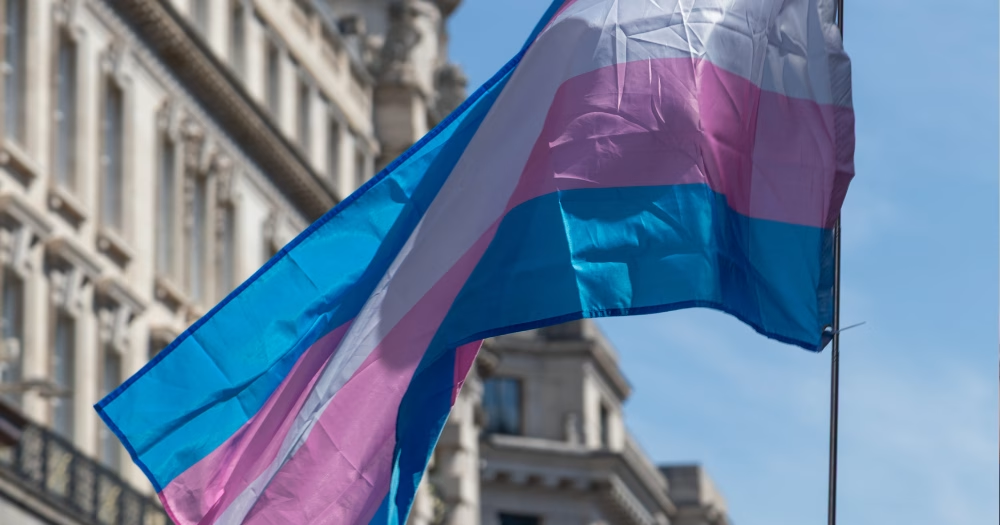
The Equality and Human Rights Commission (EHRC)’s final Code of Practice on single-sex spaces has come into force as of August 5, 2026, introducing guidance that affects how trans people access now gender-segregated facilities across the UK. The code, which applies across England, Scotland and Wales, follows the UK Supreme Court’s April 2025 ruling that the legal definition of ‘woman’ under the Equality Act 2010 refers only to biological sex.
Laid before Parliament on May 21, 2026, the final draft strongly encourages businesses, service providers and associations to provide single-sex services based on biological sex, in line with the Equality Act. While the guidance is not legally binding, it is expected to strongly influence how organisations and businesses operate.
The changes are expected to affect more than 13,000 toilets, 5,000 changing rooms and 18,000 signs, requiring significant updates across public spaces. The guidance could impact a wide range of facilities, including gyms, hospitals, restaurants and essentially any venue offering gender-segregated facilities, such as bathrooms or changing rooms.
In practice, this means that trans people may be expected to use facilities that correspond with their sex recorded at birth rather than their gender identity. The guidance also advises organisations to consider alternative arrangements for trans people, including separate “third spaces” or gender-neutral facilities. However, campaigners note that this effectively creates a separate category for trans people.
View this post on Instagram
Campaign group Good Law Project has strongly criticised the code and is backing a legal challenge against both the UK government and the EHRC. The organisation is supporting an unidentified trans claimant alongside several trans-inclusive organisations in a case challenging the legality of the new guidance.
The Good Law Project described the code of practice as “harmful” and said that it will “exclude and segregate trans people.” In a statement shared on July 15, the organisation added: “It is set to have a devastating impact on trans people’s lives.”
Campaigners have argued that the recommendation to provide separate facilities effectively treats trans people as a “third gender”, raising concerns over equality, inclusion and access to public spaces.
The legal dispute marks the latest development following the Supreme Court’s judgment in April 2025. Since then, organisations across the UK have been reviewing policies relating to single-sex services and facilities in anticipation of the EHRC’s updated guidance.
As the code comes into effect, the legal challenge supported by Good Law Project is expected to test whether the guidance is compatible with existing equality and human rights protections, with the outcome likely to have significant implications for trans people, public bodies and service providers across the country.
© 2026 GCN (Gay Community News). All rights reserved.
Support GCN
GCN is a free, vital resource for Ireland’s LGBTQ+ community since 1988.
GCN is a trading name of National LGBT Federation CLG, a registered charity - Charity Number: 20034580.
GCN relies on the generous support of the community and allies to sustain the crucial work that we do. Producing GCN is costly, and, in an industry which has been hugely impacted by rising costs, we need your support to help sustain and grow this vital resource.
Supporting GCN for as little as €1.99 per month will help us continue our work as Ireland’s free, independent LGBTQ+ media.