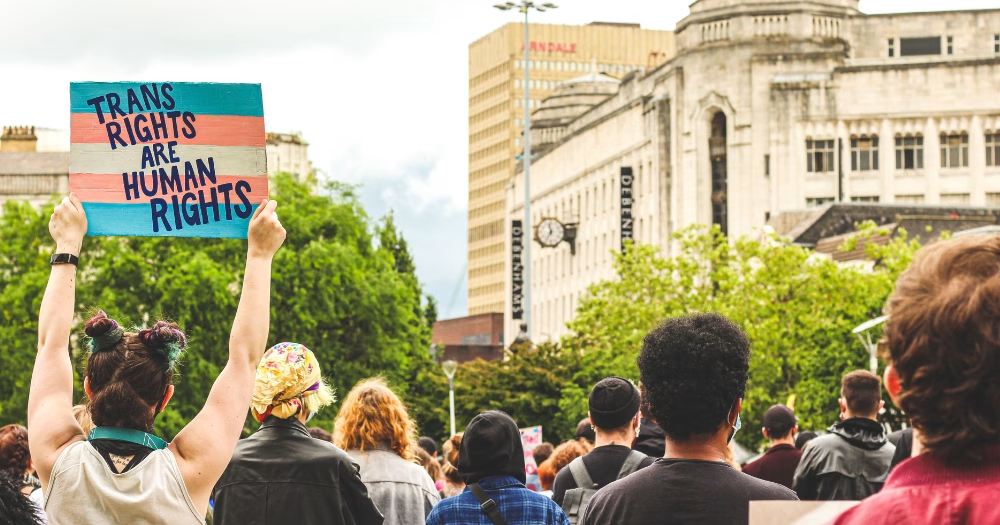
The Equality and Human Rights Commission (EHRC)’s single-sex spaces guidance will officially come into force in the UK on August 5, 2026, restricting trans people from using facilities that align with their gender identity. The guidance applies across England, Scotland and Wales and follows the April 2025 Supreme Court ruling, which determined that the legal definition of “woman” under the Equality Act refers to biological sex.
The EHRC carried out several consultations and revisions before producing the final code of practice, which was formally laid before Parliament on May 21, 2026. It should be noted that the final code of practice is not law; it is guidance setting out how service providers should apply the Supreme Court ruling in practice.
Under the code of practice, service providers in the UK will be permitted to exclude trans people from single-sex spaces. The guidance states that organisations should consider alternative options, including providing a separate “third space” or gender-neutral facilities. Campaigners have argued that this approach risks treating trans people as a “third gender”.
It is reported that more than 13,000 toilets, 5,000 changing rooms and 18,000 signs will be affected by the guidance, requiring significant changes across public spaces. The measures could affect a wide range of settings, including gyms, hospitals, restaurants and essentially any public venue with gender-segregated facilities.
View this post on Instagram
The Good Law Project has warned that the guidance risks creating stigma and could force transgender people to disclose their identity or risk outing themselves in everyday situations. Using the example of “a trans woman who goes to the pub with the rest of her female friends would have to explain why she can’t go into the women’s toilets with them”, the organisation argues that separate facilities often fail to provide equal access.
They also say that third spaces are frequently inadequate, meaning the guidance could deny trans people access to “vital services”, effectively “pushing them out of public life”. The organisation warns: “This will cause serious harm”.
Jess O’Thomson, trans rights lead at Good Law Project, described the guidance as “incredibly dangerous and likely to cause unlawful discrimination”.
“It is abhorrent that despite widespread opposition, this government has continued its attacks on trans human rights,” O’Thomson said. “The code is not only discriminatory, but utterly unworkable in practice, as so many organisations have repeatedly pointed out”.
TransActual also criticised the EHRC guidance, stating: “The new Code remains unworkable; it does not protect trans people, it does not help service providers, and it does not respect the UK’s human rights obligations. Despite widespread cross-party backlash over these clear failings, the Government has pushed ahead without a debate or a vote.”
The Good Law Project is currently seeking donations to support its appeal against the High Court’s judgment on trans rights. Donations can be made by following this link.
© 2026 GCN (Gay Community News). All rights reserved.
Support GCN
GCN is a free, vital resource for Ireland’s LGBTQ+ community since 1988.
GCN is a trading name of National LGBT Federation CLG, a registered charity - Charity Number: 20034580.
GCN relies on the generous support of the community and allies to sustain the crucial work that we do. Producing GCN is costly, and, in an industry which has been hugely impacted by rising costs, we need your support to help sustain and grow this vital resource.
Supporting GCN for as little as €1.99 per month will help us continue our work as Ireland’s free, independent LGBTQ+ media.