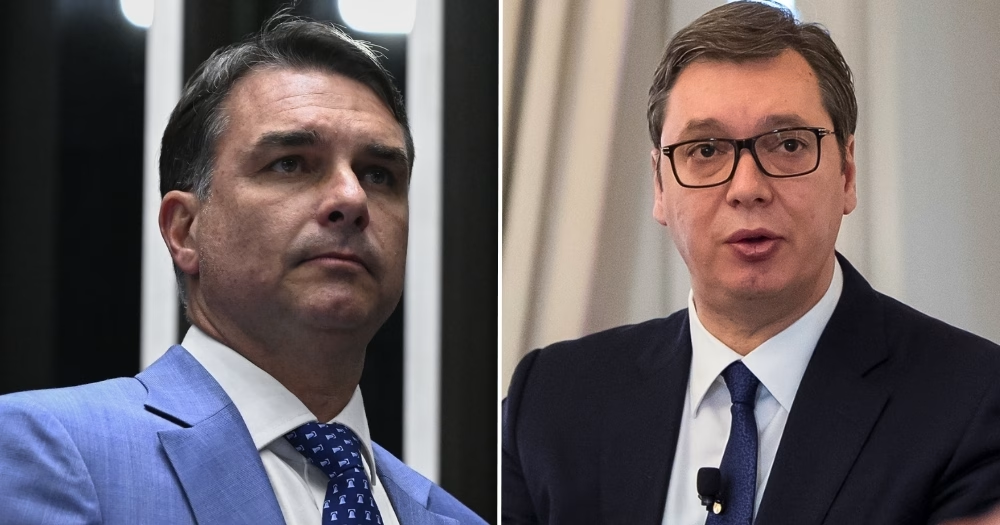
Over the weekend, right-wing leaders from two very different parts of the world were defeated in their countries’ elections, losing to more progressive parties. In Brazil, far-right presidential candidate Flávio Bolsonaro lost to Luiz Inácio Lula da Silva, while in Serbia, Aleksandar Vučić’s right-wing populist party lost the parliamentary elections to the country’s student movement.
Brazil held the first round of the election earlier in October, when Bolsonaro narrowly won over Lula, the incumbent president. Pulling off a dramatic comeback, Lula won around 4.4 million more votes than his opponent at the second-round vote, which took place on Sunday, October 25.
Bolsonaro, a right-wing senator, is also the son of far-right former president Jair Bolsonaro, who was defeated by Lula at the last elections in 2022. Having been president of Brazil from 2019 to 2023, Jair Bolsonaro was criticised for his homophobic, misogynistic, sexist, racist and anti-refugee policies and speeches.
After this year’s election concluded, his son rejected the results, crying foul play after polling was extended at Lula’s request due to transport problems that occurred in several cities. While he has indicated that he will seek annulment of the election, his party has since distanced itself from this position, officially accepting the result of the vote.
Thousands poured into the streets of Brazilian cities to celebrate Lula’s victory on Sunday night. Speaking to a crowd of supporters, Lula said: “I owe this victory to the rebellious youth who rose up to defend democracy.”
Lula’s victory is regarded as a win for democratic and environmental rights, as in the past he was able to persuade congress and parliament to pass progressive laws. His party has also been responsible for introducing a number of policies protecting LGBTQ+ rights.
In a similar turn of events, the student movement in Serbia declared victory in the elections taking place on Sunday, October 25. The parliamentary election, which recorded the highest turnout in over three decades, saw the end of 14 years in power for Aleksandar Vučić’s right-wing party.
During his years as President, the far-right statesman had developed close ties with Russia, often opposing LGBTQ+ rights in the name of protecting so-called Serbian “traditional values”. In the last 14 years, Vučić and his government also cited “security concerns” to ban Pride parades in Belgrade, using threats of violence made by right-wing extremists as a reason to cancel the events.
While in 2017 Vučić nominated Ana Brnabić as Prime Minister, making her the first openly lesbian head of government in the country’s history, it was alleged that he was using this nomination to ease EU pressures over other shortcomings on LGBTQ+ rights as Serbia progressed in the process of accession to the Union.
Brnabić was also often criticised for her failure to advocate for LGBTQ+ rights despite her prominent position. After becoming Prime Minister, she stated that she had more pressing priorities than LGBTQ+ legal reforms. Earlier in September, Brnabić became Serbia’s first openly lesbian president following Vučić’s resignation.
This year’s elections came after two years of widespread protests in Serbia, sparked by the 2024 collapse of a canopy at Novi Sad railway station, which killed 16 people. The disaster was widely attributed to the corruption of the Serbian government and poor rule of law.
A student-led movement was formed in response to the incident, which fought the election with candidates from a cross-section of Serbian society. According to official estimates, almost 65% of Serbia’s 6.4 million registered voters had already cast their ballots by 6pm, two hours before polls closed.
Speaking after the preliminary results were announced, Radomir Saičić, a candidate for the Students’ List, said: “Students won and with them also a hope that Serbia can be a country of justice, freedom and dignity.”
© 2026 GCN (Gay Community News). All rights reserved.
Support GCN
GCN is a free, vital resource for Ireland’s LGBTQ+ community since 1988.
GCN is a trading name of National LGBT Federation CLG, a registered charity - Charity Number: 20034580.
GCN relies on the generous support of the community and allies to sustain the crucial work that we do. Producing GCN is costly, and, in an industry which has been hugely impacted by rising costs, we need your support to help sustain and grow this vital resource.
Supporting GCN for as little as €1.99 per month will help us continue our work as Ireland’s free, independent LGBTQ+ media.