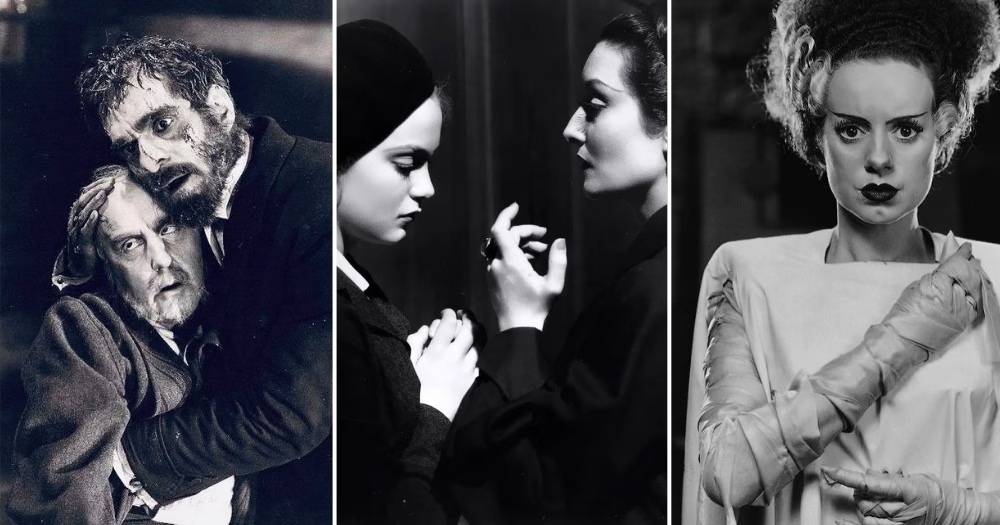
Nowadays, we are blessed with horror movies with out queer directors and actors. Movies with queer characters and stories. However, many of these horror movies were influenced by classics from an era where these things weren’t as out in the open.
One of the biggest names in the early days of horror movies was director James Whale, a man who lived openly as a gay man. Some of you may know of him from Ian McKellen’s Oscar-nominated portrayal of him in Gods and Monsters (1998). This year, I finally got around to watching some of his horror films. This led to a discovery of a bunch of queer actors, whom Whale used repeatedly. And this led to more films and actors of the 1930s.
Here are five horror classics I’d recommend that have LGBTQ+ people involved or are queer-coded.
Dracula (1931)
Queer creators: David Manners (actor)
This is one of the most iconic horror classics, and it lives up to that status. The visuals are amazing. Vampires are just queer, and it has been suggested that the author of the most famous vampire novel, Dracula (1897), Irishman Bram Stoker, was queer himself. There is also some queerness in the dynamic between Dracula and his servant Renfield. On the actor side, David Manners plays John Harker. Manners has a connection to James Whale in that he appeared in his first movie, Journey’s End (1930).
Manners met playwright Frederic William Mercer in 1948, and the two lived together as partners for 30 years until Mercer’s death in 1978. The actor would go on to star in another horror classic, The Mummy (1932).
View this post on Instagram
The Old Dark House (1932)
Queer creators: James Whale (director), Ernest Thesiger (actor), Charles Laughton (actor), Elspeth Dudgeon (actor).
A couple and their friend are lost while driving at night in a heavy storm. They come upon an old house in the Welsh countryside where they receive shelter from Horace Femm (Ernest Thesiger) and his family.
I was captivated by the performance of Ernest Thesiger as the queer-coded Horace, who is fond of a bit of gin. The actor had a very interesting life, and I ended up trying a bunch of his movies. Elspeth Dudgeon portrays patriarch Sir Roderick Femm. She is credited on-screen with a male pseudonym, John Dudgeon. I have a feeling James Whale knew what he was doing here.
View this post on Instagram
The Invisible Man (1933)
Queer creator: James Whale (director)
A stranger named Dr Jack Griffin, who is covered in bandages and wears dark glasses, appears during a snowstorm, seeking lodging in a small village. He demands that he be left completely alone. His landlady and the villagers eventually discover he is invisible. Driven insane by the invisibility formula, Griffin attempts to display his superiority over other people by performing harmless pranks at first and eventually turning to murder.
The first thing I thought of when I started watching this film was the lyric from ‘Science Fiction/Double Feature’ of The Rocky Horror Picture Show (1975) fame: “Claude Rains was The Invisible Man.” The invisibility effect is a piece of cinematic magic. Also, quite rude when you think about it. Every time Griffin is fully invisible, he is essentially naked. Queer themes of societal alienation, repression, and the double life of an outsider can be found in this one.
View this post on Instagram
Bride of Frankenstein (1935)
Queer creators: James Whale (director), Colin Clive (actor), Ernest Thesiger (actor).
Taking place immediately after the events of Frankenstein (1931), Bride sees a chastened Henry Frankenstein (Colin Clive) attempting to abandon his plans to create life. His old mentor, Dr Pretorius (Ernest Thesiger), appears to tempt him to return to his work, eventually resorting to blackmail.
This, along with threats from the Monster (Boris Karloff), sees him attempt to construct a bride for the Monster. Again, I call out Ernest Thesiger in another scene stealing a queer-coded role. He literally steals Frankenstein from his wife on their wedding night to go make new life. He is also still fond of the gin.
View this post on Instagram
Dracula’s Daughter (1936)
Similar to Bride, this takes place directly after the first film. Van Helsing is arrested for killing Dracula and is taken to Scotland Yard. He asks a psychiatrist friend, Dr Jeffrey Garth, for help in his defence. Meanwhile, Countess Marya Zaleska, Dracula’s daughter, steals the Count’s body and burns it.
Despite his demise, she still feels the need to feed. She seeks Garth’s help in removing this impulse. This film has the most obvious queer vibes. The scene where Countess Zaleska encounters a girl named Lil is surprising in its obviousness, and you’d wonder how it got past the censors. Zaleska’s feeding impulse can easily be read as a sexual desire towards women.
View this post on Instagram
© 2026 GCN (Gay Community News). All rights reserved.
Support GCN
GCN is a free, vital resource for Ireland’s LGBTQ+ community since 1988.
GCN is a trading name of National LGBT Federation CLG, a registered charity - Charity Number: 20034580.
GCN relies on the generous support of the community and allies to sustain the crucial work that we do. Producing GCN is costly, and, in an industry which has been hugely impacted by rising costs, we need your support to help sustain and grow this vital resource.
Supporting GCN for as little as €1.99 per month will help us continue our work as Ireland’s free, independent LGBTQ+ media.