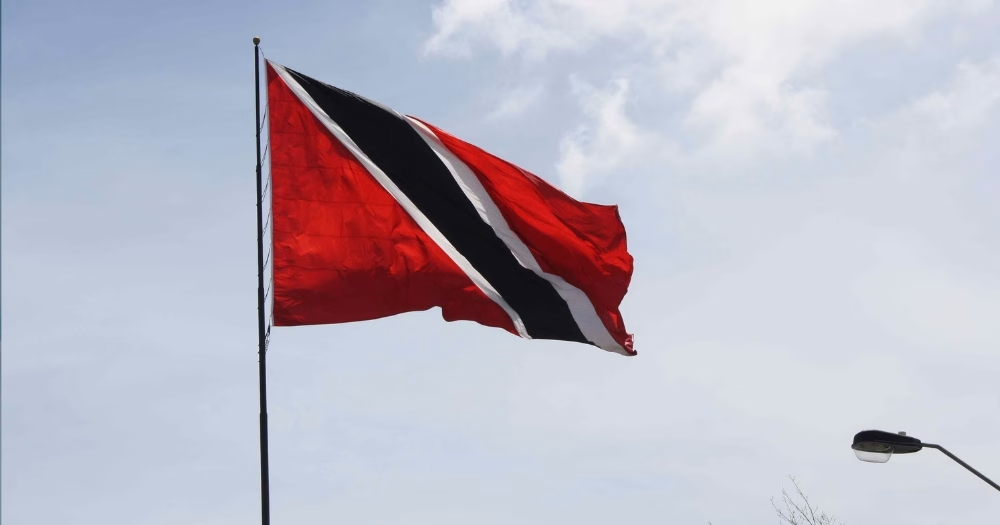
The Privy Council, headquartered in London, has determined that the colonial-era ban on same-sex relations in Trinidad and Tobago is unconstitutional in a new and conclusive ruling.
Despite the fact that Trinidad and Tobago achieved complete sovereignty from British colonialism in 1962, the Privy Council still serves as the highest appellate court in the Caribbean country’s legal system.
The ruling comes after an almost decade-long fight to overturn the ban by gay activist Jason Jones, who was born in Trinidad and Tobago but left in 1996, citing the homophobic violence and prejudice that he faced. He has since been in a legal fight to overturn the laws against same-sex activity in his home country, which carried a sentence of up to five years in prison for “buggery.”
Jones, who said he has been out about his sexuality since he was 16, claimed that the Sexual Offences Act was a breach of his constitutional rights. He managed to attain a brief success in early 2018, when the country’s High Court agreed with him, overturning the ban.
Still, a domestic appellate court ultimately overruled that decision in March 2025, and homosexuality was recriminalised. The government of Trinidad and Tobago itself served as one of the key objectors to Jones’ legal challenge, and other religious groups also rallied against the overruling of the ban on same-sex activity.
While The Independent noted that the laws weren’t enforced in modern times, activists campaigned against the message they gave to the public.
Judge Philip Sales delivered the unanimous decision on November 10, and claimed that: “Those laws cannot be regarded as reasonably justifiable in a society that has a proper respect for the rights and freedom of the individual.”
“The current understanding of the fundamental individual right to respect for private and family life is that it protects such a core part of human identity, as one’s sexual orientation and the sexual activities carried on in private between consenting adults to give expression to that identity,” he said. “Laws which seek to criminalise such activities cannot be justified.”
Throughout the region, similar laws have been overturned in places like Barbados, Dominica, St Lucia, and Antigua and Barbuda. However, Grenada, Jamaica, and St Vincent and the Grenadines are among those that still criminalise consensual relations between men.
© 2026 GCN (Gay Community News). All rights reserved.
Support GCN
GCN is a free, vital resource for Ireland’s LGBTQ+ community since 1988.
GCN is a trading name of National LGBT Federation CLG, a registered charity - Charity Number: 20034580.
GCN relies on the generous support of the community and allies to sustain the crucial work that we do. Producing GCN is costly, and, in an industry which has been hugely impacted by rising costs, we need your support to help sustain and grow this vital resource.
Supporting GCN for as little as €1.99 per month will help us continue our work as Ireland’s free, independent LGBTQ+ media.