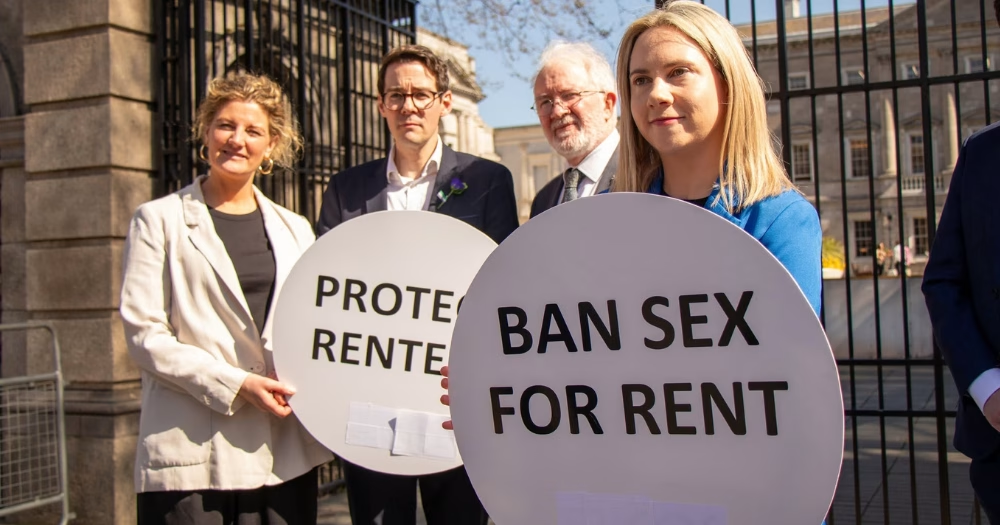
Ireland has formally criminalised the practice of ‘Sex for Rent’, with new legislation coming into effect on Tuesday, 14 July, making it an offence to offer or advertise accommodation in exchange for sexual activity.
The new laws prohibit sexual acts being used as a condition of, or in exchange for, accommodation, with the aim of protecting vulnerable people seeking housing. The legislation, which has now passed all stages in the Oireachtas, included Jennie’s Law, Valerie’s Law, measures criminalising ‘sex for rent’, and provisions that will restrict the disclosure of counselling notes in criminal trials.
The legislation comes against the backdrop of Ireland’s ongoing housing crisis, which has heightened insecurity in the private rental market. Historically, relatively weak protections for tenants and an imbalance of power between landlords and renters have contributed to widespread housing insecurity. People, such as those on low incomes, lone parents, migrants, unemployed people, students, older people, LGBTQ+ people and disabled people, have been disproportionately affected.
View this post on Instagram
The momentum for legislative change followed a 2021 investigation by the Irish Examiner, which uncovered multiple online advertisements offering accommodation in exchange for sex. The outlet subsequently interviewed several women who said they had been offered reduced-cost or rent-free accommodation on the understanding that sex or bed-sharing with the landlord would form part of the arrangement.
More recent research by the Irish Council for International Students (ICOS), published in 2025, found that one in 20 international students in Ireland had been exposed to offers of rent-free accommodation in exchange for sex. The study also found that one in seven had been offered accommodation where they were expected to share a room and sleep in the same bed with a stranger.
In 2024, the National Women’s Council published a report on sexual exploitation and sexual harassment in the rental housing market. The report highlights its “prevalence, legal gaps, and the vulnerabilities of those targeted, particularly women facing poverty, homelessness, or domestic violence”.
Senator Laura Harmon, who introduced legislation on this issue in early 2025 following Social Democrats TD Cian O’Callaghan’s bill in 2022, addressed the news in a statement published by the Labour Party: “It is inconceivable that this practice did not have its own statutory provision until now. We must protect vulnerable people in the rental sector, particularly women, migrants and international students.”
Concerns surrounding sexual exploitation in the rental market have been documented for several years. In 2018, GCN reported on a BuzzFeed investigation into sexual coercion against young men by landlords, which also examined how such practices were being facilitated by major internet companies, including Meta.
Although the legislation has been met with celebration, concerns have been raised as there are currently no protections within the Act for those living in ‘Sex for Rent’ circumstances, and therefore it is likely that the consequence of reporting their situation to the Gardaí could be eviction.
© 2026 GCN (Gay Community News). All rights reserved.
Support GCN
GCN is a free, vital resource for Ireland’s LGBTQ+ community since 1988.
GCN is a trading name of National LGBT Federation CLG, a registered charity - Charity Number: 20034580.
GCN relies on the generous support of the community and allies to sustain the crucial work that we do. Producing GCN is costly, and, in an industry which has been hugely impacted by rising costs, we need your support to help sustain and grow this vital resource.
Supporting GCN for as little as €1.99 per month will help us continue our work as Ireland’s free, independent LGBTQ+ media.