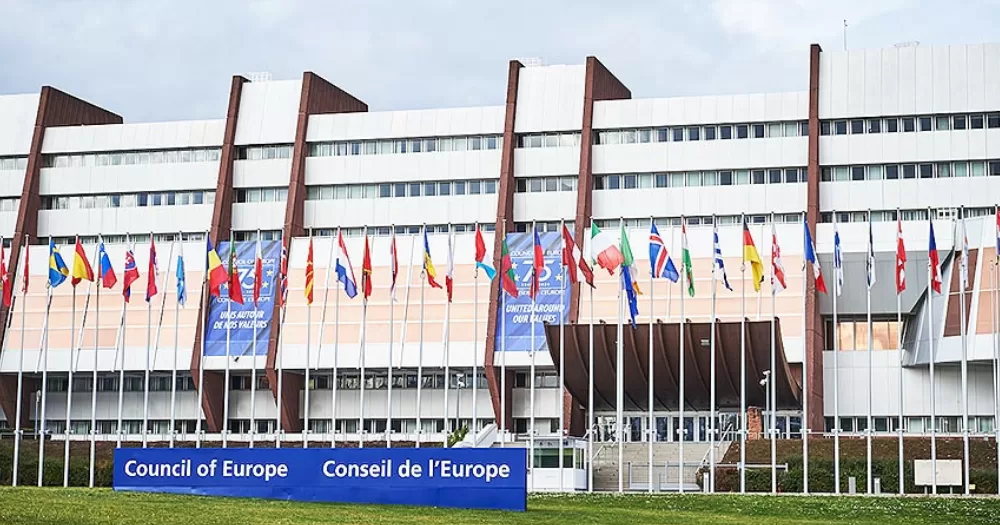
The Council of Europe has voted to ban so-called conversion practices, delivering a significant victory for LGBTQ+ rights campaigners despite last-minute lobbying efforts by anti-trans groups.
The human rights body, which is independent of the European Union, passed a resolution calling on its 46 member states to prohibit conversion practices. The motion was tabled by Labour MP Kate Osborne and brought to a vote on Thursday, January 28.
71 members of the Parliamentary Assembly of the Council of Europe voted in favour, while 26 voted against and two abstained.
Conversion practices are widely condemned as abusive acts that attempt to change or suppress a person’s sexual orientation or gender identity, something medical and psychological experts agree is not possible. These practices often involve severe psychological harm and, in some cases, physical abuse, and are most commonly associated with conservative religious groups. Survivors and campaigners have long described them as a form of torture.
Osborne introduced the resolution on January 6 as part of a broader effort to encourage member states to “prevent and counter the harm caused” by conversion practices. In her submission, she wrote that “conversion practices have no scientific basis” and instead have “harmful consequences” on individuals subjected to them.
“They induce or strengthen feelings of shame, guilt, self-disgust, and worthlessness, and lead to increased rates of depression, anxiety, post-traumatic stress disorder, suicidal ideation, and suicide attempts,” Osborne continued.
Research consistently supports these warnings. According to the Trevor Project, survivors of conversion practices are more than twice as likely to attempt suicide and nearly three times as likely to report multiple suicide attempts within a single year.
The resolution passed despite vocal opposition from the gender-critical campaign group Sex Matters, which urged members to reject what it described as a “shocking resolution”. The organisation claimed that a ban would make it “even harder” to subject trans children to psychological screening, arguing this could determine whether they are “confused about their sex”.
Campaigners strongly disputed these claims. Research from the Society for Research in Child Development (SRCD) indicates that trans children are just as consistent in their gender identity as their cisgender peers.
In the days before the vote, the Good Law Project called for urgent action against Sex Matters, stating that more than 10,000 people had contacted UK parliamentary representatives at the Council of Europe, urging them to support the ban.
Following the vote, Good Law Project’s trans rights lead Jess O’Thomson described the outcome as a major step forward. “As a member of the queer community, I sadly have many friends who have been subjected to conversion practices. I was unfortunate enough to experience them myself,” they said. “No person deserves to be tortured for who they are.”
O’Thomson also called on the UK government to act, adding: “It’s now time for the UK government to follow the Council of Europe and ensure a trans-inclusive ban on conversion practices.”
In Ireland, the Prohibition of Conversion Therapies Bill 2018 was introduced in Ireland and presented to the Seanad by Senator Fintan Warfield in April 2018 as a private members’ bill. It sought to prohibit so-called ‘conversion therapy’, a deceptive and harmful practice against a person’s sexual orientation, gender identity and/or gender expression. The bill passed its second reading in the Seanad in May 2018 but did not complete all stages before the dissolution of the Dáil and Seanad ahead of the 2020 general election.
© 2026 GCN (Gay Community News). All rights reserved.
Support GCN
GCN is a free, vital resource for Ireland’s LGBTQ+ community since 1988.
GCN is a trading name of National LGBT Federation CLG, a registered charity - Charity Number: 20034580.
GCN relies on the generous support of the community and allies to sustain the crucial work that we do. Producing GCN is costly, and, in an industry which has been hugely impacted by rising costs, we need your support to help sustain and grow this vital resource.
Supporting GCN for as little as €1.99 per month will help us continue our work as Ireland’s free, independent LGBTQ+ media.