This article is part of GCN’s new Amach le Bród (Out with Pride) series, to combat anti-LGBTQ+ misinformation and platform underrepresented voices. The project was funded by the Coimisiún na Meán News Reporting Scheme.
Only a few months ago, Ireland’s National Gender Service (NGS) announced they would be closing their waiting lists due to not having the capacity to take on more patients. The HSE halted this decision, stating that they do not have the authority to do so. Even then, a clear message was sent to the trans people of Ireland: the NGS cannot be relied upon as the single public provider of trans healthcare. Yet, how did we get here? How did Ireland become one of the worst countries in Europe for gender-affirming care?
St Columcille’s Hospital in Loughlinstown, where the NGS is located, has provided gender-affirming care since the 2000s. At first, it was on a small scale. Clinical Lead Dr Karl Neff explained in The Irish Times, “When a gender service was initially offered at St Columcille’s Hospital almost 20 years ago, referral rates did not exceed 10 people per year.”
In 2004, Transgender Equality Network (TENI) was founded in Cork. It was later reestablished in 2006, becoming instrumental in advocating for the healthcare needs of the trans community in Ireland.
Throughout the 2010s, the number of referrals grew exponentially from 12 a year to more than 300. With the rising demand, a Model of Care (MoC) was developed by the HSE between 2014 and 2017 in consultation with trans people and LGBTQ+ organisations like TENI. However, this model soon became contested by a simultaneous proposal by clinicians at the National Gender Service. The latter was ultimately the one that was implemented.
In 2019, the NGS admitted to misplacing over 100 patient referrals, showing severe oversight in management. TENI publicly responded to the incident, stating, “We are shocked and disappointed at this disregard for patients. This will have a devastating impact on our community. It is a breach of trust.”
Later that year, the Health Service commissioned a steering committee to re-examine the current system of gender-affirming care in the country, which was made up of NGS staff, TENI representatives and clinicians of various disciplines. A 2020 HSE report outlines the recommendations of this committee, such as moving ” from the current system of psychological support provided by Tavistock Clinic for those under 18 years old to ensure services are provided and delivered by the Irish Health Service”.
For context, trans people under 18 at the time were referred to Children’s Health Ireland (CHI) in Crumlin for gender-affirming care, though psychological assessments were handled by the Tavistock Gender Clinic in the UK under the Treatment Abroad Scheme.
However, in 2021, the CHI announced that they would no longer be accepting referrals, and all those on the waiting list would be referred to a new service that did not currently exist. As reported by the Journal, the CEO of TENI at the time, Éirénne Carroll, stated: “This would mean that young people and their families that have already suffered a two-year wait to be seen by GIDS/UK, will potentially be waiting in limbo for a service that does not exist.”
The state of gender-affirming care for trans youth in Ireland continued to decline when Tavistock halted direct referrals in 2022 in response to interim recommendations by Dr Hillary Cass, as part of an NHS review of their gender identity services for children and adolescents. The HSE subsequently published a report in 2023 which examined the implications of the Cass Report for trans healthcare in Ireland and also recognised the need for a new Model of Care.
The insufficient state of the trans healthcare system became especially clear when Transgender Europe and Central Asia (TGEU) published their Trans Health Map in 2022. The map visualises the level of access to gender-affirming care across Europe, with Ireland being ranked as one of the lowest.
In 2023, the HSE appointed Dr Karl Neff from the NGS as the clinical lead of transgender services in Ireland. The choice was heavily criticised by LGBTQ+ activists and organisations, as there was no attempt made to consult with members of the trans community.
Some positive news came when the Minister for Health, Stephen Donnelly, announced that he was committed to engaging with the community in reforming the trans healthcare system. Later that year, the grassroots group Transgress the NGS wrote an open letter directed to the Minister outlining their demands for improvements in the Irish trans healthcare system. Specifically, they asked for General Practitioners (GPs) to be informed that they could prescribe hormone replacement therapy, provide blood tests and monitor blood levels for trans patients.
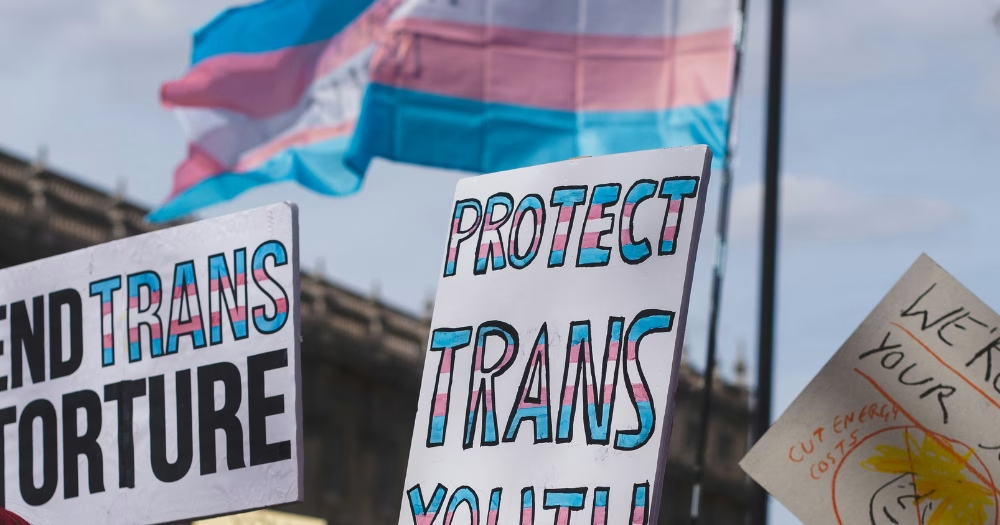
The open letter was met with a largely positive response online, yet despite its publicity, Transgress the NGS stated on social media, “So far we’ve received no response from the NGS, HSE or the Minister of Health, Stephen Donnelly. This is despite the fact that the Minister promised to meet trans community groups to discuss the problems with trans healthcare in Ireland”. This lack of sufficient response led to a ‘Rally for Trans Healthcare’ being held outside the Dáil on October 25, 2024.
Furthermore, Belong To’s 2024 research report, Trans Healthcare in Ireland, found that 41% of respondents reported a 1 to 2 year waiting time to be seen by the NGS, while 30% experienced a wait of 3 to 5 years. The pressure and demands of various trans rights groups in Ireland ultimately contributed to the formation of the Professional Association for Trans Health Ireland (PATHI), which launched at University College Cork’s (UCC) TransCare conference.
The extended waiting times for the NGS also meant that many trans people in Ireland were turning to self-medication. In response, Transgress the NGS established their injection supply programme in 2025 in collaboration with University College Dublin Student Union (UCDSU) and Trinity College Dublin Student Union (TCDSU).
Despite the National Gender Service’s attempt to close their waiting lists, 2026 has seen more active progress in the development of the new Model of Care. For instance, a policy and oversight group for trans healthcare in Ireland was formed by the Department of Health, and numerous Irish LGBTQ+ organisations like TENI are currently involved in the HSE’s MoC development process. Dr Karl Neff’s term as clinical lead of the HSE’s transgender services will come to a close at the year’s end once the new Model is drafted.
Looking at the timeline of Irish trans healthcare in perspective, it is evident that the NGS’s position as the sole provider of public gender-affirming care in the country, as well as their current outdated Model of Care, has created many barriers for trans people. What is also clear in retrospect is the resilience of the trans community throughout, never letting go of the hope that things will get better.

© 2026 GCN (Gay Community News). All rights reserved.
Support GCN
GCN is a free, vital resource for Ireland’s LGBTQ+ community since 1988.
GCN is a trading name of National LGBT Federation CLG, a registered charity - Charity Number: 20034580.
GCN relies on the generous support of the community and allies to sustain the crucial work that we do. Producing GCN is costly, and, in an industry which has been hugely impacted by rising costs, we need your support to help sustain and grow this vital resource.
Supporting GCN for as little as €1.99 per month will help us continue our work as Ireland’s free, independent LGBTQ+ media.