This article is part of GCN’s new Amach le Bród (Out with Pride) series, to combat anti-LGBTQ+ misinformation and platform underrepresented voices. The project was funded by the Coimisiún na Meán News Reporting Scheme.
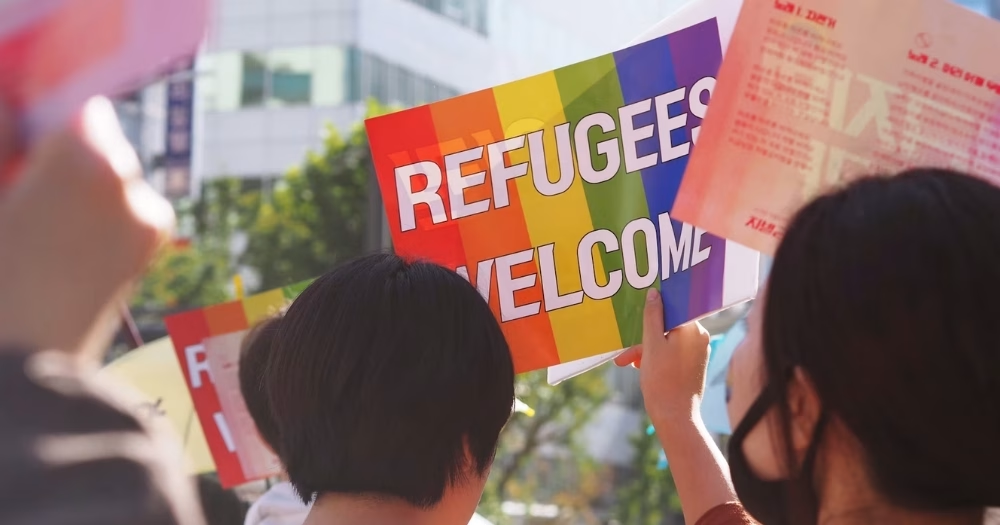
New rules under the EU Pact on Migration and Asylum have been in place since June 12 this year. While the aim of the legislation is stated to be both a streamlining and aligning of asylum application processes across the EU, it has come with a number of changes that could make the process more challenging for LGBTQ+ people seeking asylum in Ireland.
The Pact changes the processes for all asylum applicants, with the aim of speeding up the processing of applications. Applicants are firstly screened and registered. Asylum seekers then complete their formal written asylum application, which can be done with the assistance of an interpreter if needed.
A review of their application then takes place. The review determines which process will be used for determining the outcome of the asylum application. The ‘Standard Procedure’ for most applicants (if they haven’t been turned away at the border due to the new regulations, or their processing has not been accelerated due to doubts or concerns about the reasons for their asylum application) should be completed within six months.
Within that time frame, the applicants face a formal interview that aims to investigate and verify the claims made in their asylum application. A final decision is made on the basis of that interview as to whether the application is successful or not.
While the system has only been in place for around three months (only applications submitted from June 12 make use of the new system), already some consequences are becoming clear. First is that the number of applications is down, with the government announcing that there has been a 39% fall in asylum applications since the Pact entered force.
A similar decrease has been reflected in contacts made to LGBT Ireland, who run both a support service and Is Rainbow Muid, a peer support group for LGBTQ+ people seeking international protection in Ireland. “We are very confident that the International Organisation for Migration staff know how to advise and guide people to reach out to us,” says Collette O’Regan, Senior Training and Advocacy Manager for LGBT Ireland. “That isn’t happening to the same level at all. Numbers have dropped, so we’re all still in watching, observing, learning mode.”
While no cause is yet fully apparent for the drop in applications, it is concerning given that the dangers faced by LGBTQ+ people in some other countries have not diminished. Twelve countries still have the death penalty for LGBTQ+ people, while 57 impose prison sentences for being LGBTQ+. The deterrence to seek out safety in Ireland may have been discouraged by the new regulations, potentially placing people from these countries at continued risk to their safety.
Even if applicants do reach Ireland and submit an application, changes to the process now require greater up-front disclosure about their sexuality or identity. Where previously applicants were able to amend their initial application (completed within their first seven days in the asylum process in Ireland), under the new regulations no changes or additions can be made to an asylum application after its initial submission.
This presents specific issues for LGBTQ+ asylum seekers, who may not (for obvious reasons, given stigmatisation, abuse, or risks that they have experienced) have been out or open about their sexuality in their home place, and also may not feel comfortable disclosing their sexuality in writing on first arriving in Ireland and in the midst of a complex process. Along with the possibility of language barriers or understanding of the process that would impact many asylum seekers, not being comfortable to fully disclose their true reason for seeking asylum now comes at a cost to the potential success of their application.
“One of the main reasons that people don’t disclose early is because of the lack of privacy. You could be heard, and people were heard saying [they were LGBTQ+],” explains MB Chattouh, Key Worker for LGBTI+ International Protection Applicants with LGBT Ireland. “Another reason they don’t say it is because of the cultural mediator or the interpreters. They could be from the same region or the same country [as the applicant].”
This presents huge pressures for LGBTQ+ asylum seekers to disclose details about the identity that they may not feel safe doing so close to their arrival in Ireland. “If they want to add more information, new information, they can describe more what they’ve put in their form. But new information that wasn’t in their form, that’s not taken into consideration,” says Collette.
The challenge under these new regulations has shifted from supporting people through their interview to ensuring that new arrivals have the knowledge and support they need to be able to make that disclosure as early as possible. This includes continued training, workshops, and partnering with organisations and officials who work directly with asylum seekers, so as to be able to signpost to LGBTQ+ support services.
An additional challenge then lies in ensuring that supports are dedicated to those who are LGBTQ+. Applicants whose identities do not fall under the LGBTQ+ banner are sometimes advised that claiming to be LGBTQ+ may help in their application process. While that may be done for a number of reasons, the concern raised is that it could cause greater scrutiny of the claims for people who are genuinely LGBTQ+ during their asylum process, and risks creating less safe support services and spaces.
“We have a very comprehensive safeguarding procedure, whereby people who provide us with a little bit more information by email will be invited to what we call a ‘pre-meeting’,” details Collette when talking about the process used for Is Rainbow Muid. “We give people an hour, with two staff members. It’s very time intensive, very resource intensive. But that’s what we do in order to keep our space as safe as possible. Otherwise, we’re not offering people the safe space that they need to finally let their guard down a little bit; to speak up and ask questions and begin to relax and to enjoy their identity, to finally experience the Irish freedom to be who you are.”
‘‘They don’t experience it hardly anywhere else, because they can’t, they have to keep it all locked up in order to keep themselves safe.”
These new regulations certainly make the process to get to that point of freedom more challenging, particularly in the early and initial stages. While the regulations and processes are still young, it’s clear that the sector is working out how to be accessible as a touchpoint as asylum seekers arrive, or even before they reach Ireland. Whether the processes can be adapted or amended to make life more straightforward for LGBTQ+ asylum seekers rather than more challenging remains to be seen.
© 2026 GCN (Gay Community News). All rights reserved.
Support GCN
GCN is a free, vital resource for Ireland’s LGBTQ+ community since 1988.
GCN is a trading name of National LGBT Federation CLG, a registered charity - Charity Number: 20034580.
GCN relies on the generous support of the community and allies to sustain the crucial work that we do. Producing GCN is costly, and, in an industry which has been hugely impacted by rising costs, we need your support to help sustain and grow this vital resource.
Supporting GCN for as little as €1.99 per month will help us continue our work as Ireland’s free, independent LGBTQ+ media.