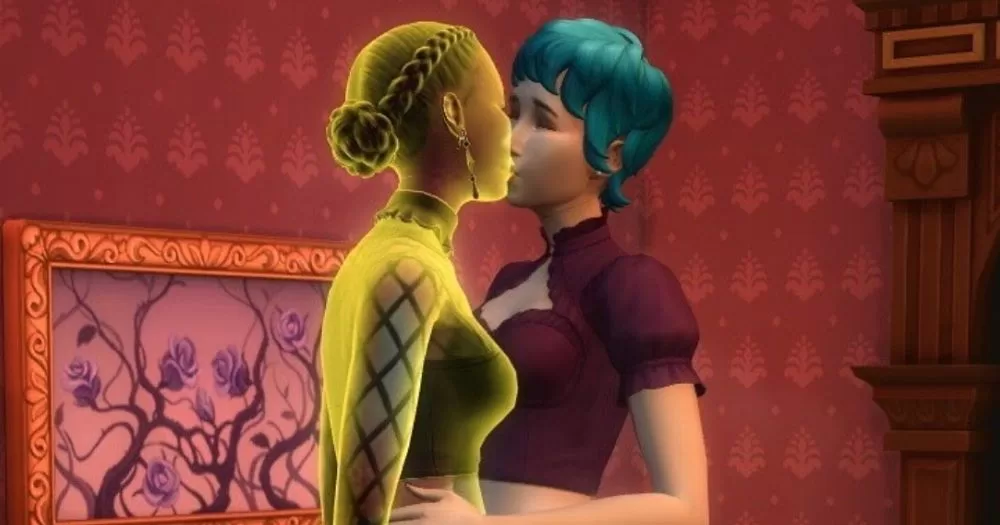
If much of your childhood was spent cooped up in your bedroom designing elaborate homes, raising families and typing cheat codes into The Sims, then you are certainly not alone. The game franchise, which was first released in 2000, was a global success story and, over the years, it became particularly popular with LGBTQ+ gamers, who learned their Sims could be in same-sex relationships from the first game.
Over time, the franchise became much more inclusive of its queer fanbase, and this was reflected in gameplay. In The Sims 2, gay and lesbian couples were given the opportunity to formalise their relationship with a Joined Union, although heterosexual couples could be officially married. Same-sex couples were also able to adopt children and, when using the game’s matchmaking service, Sims could select a date that was male or female.
With the release of The Sims 4 in 2014, marriage became available to all couples, regardless of gender. Gamers were also given the option to customise their Sims’ sexual orientation.
View this post on Instagram
Given the game franchise’s efforts to represent its wide spectrum of fans in its gameplay, it’s unsurprising that The Sims has cultivated a large queer following, particularly online. A number of the most prominent Sims content creators are members of the LGBTQ+ community, allies and advocates, including EnglishSimmer, vstreetlove and MuirlySims.
It is precisely this strong connection between The Sims and the queer community that some fans are concerned about the news that The Sims‘ publisher, Electronic Arts, has been acquired in a $55 billion deal by the Saudi Arabia Public Investment Fund and Affinity Partners. Jared Kushner, Donald Trump’s son-in-law, is the CEO of the latter group.
When the acquisition was announced, a number of fans expressed concern over the franchise’s new ownership. Many were worried the influence of the government of Saudi Arabia – where same-sex relationships are punishable by death – would impact the game’s previous inclusion efforts.
In addition to a boycott from fans, three popular Sims content creators – Plumbella, James Turner and lilsimsie – announced that they would be leaving the EA Creator Network. Through their involvement with the network, these creators worked closely with EA, contributing packs and creating lots.
Amid backlash, the Sims team took to X with a statement, in which they said they are “continually inspired by our incredible players and creators”, and added that they “deeply respect that everyone experiences The Sims in their own way and will make choices that are right for them”.
While The Sims did not directly address fans’ concerns regarding inclusion and representation, the team said their “missions, values and commitment remain the same”.
“The Sims will always be a space where you can express your authentic self,” they said.
As fans worry about the future of the franchise, only time will tell if newer iterations of the game will remain representative of The Sims‘ diverse community of players.
© 2026 GCN (Gay Community News). All rights reserved.
Support GCN
GCN is a free, vital resource for Ireland’s LGBTQ+ community since 1988.
GCN is a trading name of National LGBT Federation CLG, a registered charity - Charity Number: 20034580.
GCN relies on the generous support of the community and allies to sustain the crucial work that we do. Producing GCN is costly, and, in an industry which has been hugely impacted by rising costs, we need your support to help sustain and grow this vital resource.
Supporting GCN for as little as €1.99 per month will help us continue our work as Ireland’s free, independent LGBTQ+ media.