Hormone replacement therapy (HRT) is not the same as birth control. While HRT can affect fertility, it does not stop pregnancy. Let’s cover some of the basics of birth control you may need to know, especially if you are a trans man or non-binary person with a uterus.
Men can and do get pregnant, even if your periods have stopped, a topic which is stunningly explored in a recent Northern Irish short film by the outstanding writer and director Caleb J. Roberts, Purebred.
Another example of good representation on the topic is Bennett Kaspar-Williams, a trans man, activist, lawyer, and creator, who documented his experience of being a pregnant man on social media.
View this post on Instagram
For those who want some autonomy over their own body, by having the ability to choose when and if they become pregnant, birth control is important, but it’s not just about preventing pregnancy. Plenty of people, trans or not, take birth control for a variety of reasons.
One of those reasons is to stop menstruation, again in an act of autonomy and for seeking comfort. Many trans men or non-binary people with uteri are uncomfortable with having their periods, and even if they are on HRT, it won’t necessarily stop them altogether.
Kenny Ethan Jones spoke publicly of the trouble it caused him. It can also lead to awkward social situations or being outed. Most men’s bathrooms don’t have anywhere to dispose of period products, and they can’t be flushed. So, what’s a guy to do?
Research is severely lacking on the sexual health of non-binary people, and sexual health clinics are often advertised for catering to either men or women. Gaining access to healthcare as a trans or non-binary person in Ireland can be daunting enough, but for a holistic approach, birth control should be considered.
If you are at all at risk of becoming pregnant, and that’s not the goal, get yourself to a GP or sexual health clinic.
Contraceptive pills
Trans men and non-binary people can take contraceptive pills. It is often assumed they will mess with your hormones.
You won’t detransition, but be sure to talk to your healthcare provider to make sure you get the right one for you, as some medications interfere with it. This includes ones that treat epilepsy and HIV.
Inform them of all of your current medications, your HRT, and your goals for contraception. Progestin-only pills (POP) are the favourite of trans people in this, as they don’t have any estrogen.
If you don’t want periods, make sure to get the continuous ones that you take every day of the month, without any sugar pills! They are over 99% effective when used correctly. The catch is, you’ll have to take it every day.
If you already take testosterone as gel every day, it can be simple to add to your routine. If you don’t trust yourself to remember every day, you can add reminders to your phone and get a daily tablet box.
Alternatively, consider another form of birth control like Depo-Provera, a copper IUD, or an implant.
To my bowel-bothered brothers, if you have problems while on the pill, and are going to have the type of sex you could get pregnant from, you’d better use another form of contraception.
It is also very important to know that forms of contraception will not protect you from STIs!
Contraceptive injections (medroxyprogesterone)
Contraceptive injections such as Depo-Provera are a great option if you want something a bit longer-lasting than pills. They prevent pregnancy (and usually periods) for 3 months, which works out quite nicely if you get your T-shot every 3 months.
It stops your body from releasing eggs for 12 weeks. It’s an intramuscular injection that must be administered by a doctor or nurse. They are over 99% effective.
You pretty much only have to think about it every 12 weeks. It is not affected by other medications, doesn’t interfere with sex, and just might protect you from cancer of the womb and pelvic inflammatory disease. Once again, this will not protect you from STIs.
Contraceptive Implants
Implants are a small rod which is inserted under the skin on your upper arm. They prevent ovulation and must be removed or replaced after about 3 years.
Again, they are over 99% effective and will not protect you from STIs.
Intrauterine devices (IUDs)
A longer-term contraceptive method is an IUD, aka a coil. There are two kinds of IUD: copper and hormonal.
Copper IUDs are a hormone-free option for the already hormone-pilled folks. They are a little T-shaped plastic frame wrapped in copper wire, and placed by a specially trained medical professional.
They work immediately and can stay in for 5 to 10 years. It doesn’t interrupt sex and is over 99% effective, but may increase periods.
A hormonal IUD, like Mirena, is a similar plastic T-shaped frame that slowly releases progestin. They can work for up to eight years, and can lessen periods. They are often prescribed to treat endometriosis and anaemia.
There are contraindications, so make sure to talk to your healthcare provider and inform them of all current medications, including supplements and herbal products.
IUDs do come with some risk of pain during and after insertion, as well as the risk of it coming out.
They will not prevent STIs!
Permanent Solutions
Surgery. The longest-lasting birth control for trans men and non-binary people with uteri. You can have your tubes tied or removed altogether. They can be outpatient procedures that require a general anaesthetic. Surgery always comes with risks.
Condoms
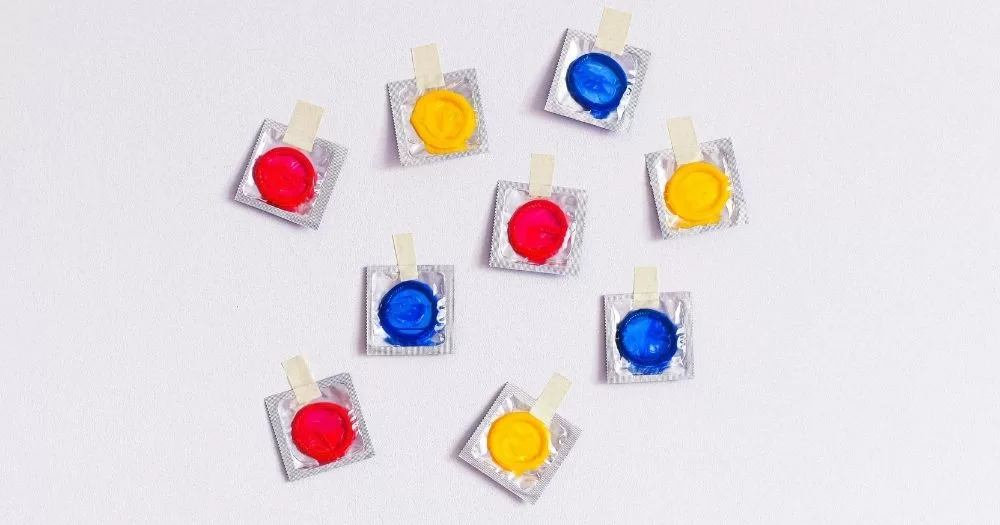
A classic. The only contraceptive option here that can be purchased OTC at your local garage. Use lube to prevent tearing.
Emergency Contraception
The ‘morning after pill’. You might have to have an awkward interaction in the pharmacy, but that’s better than an unwanted pregnancy.
You can’t pretend to be a caring boyfriend, picking it up for your girlfriend. You have to tell them it’s for you. They can be taken up to 72 hours after the event, but are more effective the sooner they are administered.
IUDs can also be used as emergency contraceptives for up to 5 days after unprotected sex. Don’t forget to get tested regularly, get vaccinated, and still get your cervical check.
Finally, a little section on birth control for trans women and non-binary people with gonads. If you are having the kind of sex that could get your partner pregnant, wear a condom or consider having a vasectomy.
Have fun, stay safe!
© 2025 GCN (Gay Community News). All rights reserved.
Support GCN
GCN is a free, vital resource for Ireland’s LGBTQ+ community since 1988.
GCN is a trading name of National LGBT Federation CLG, a registered charity - Charity Number: 20034580.
GCN relies on the generous support of the community and allies to sustain the crucial work that we do. Producing GCN is costly, and, in an industry which has been hugely impacted by rising costs, we need your support to help sustain and grow this vital resource.
Supporting GCN for as little as €1.99 per month will help us continue our work as Ireland’s free, independent LGBTQ+ media.