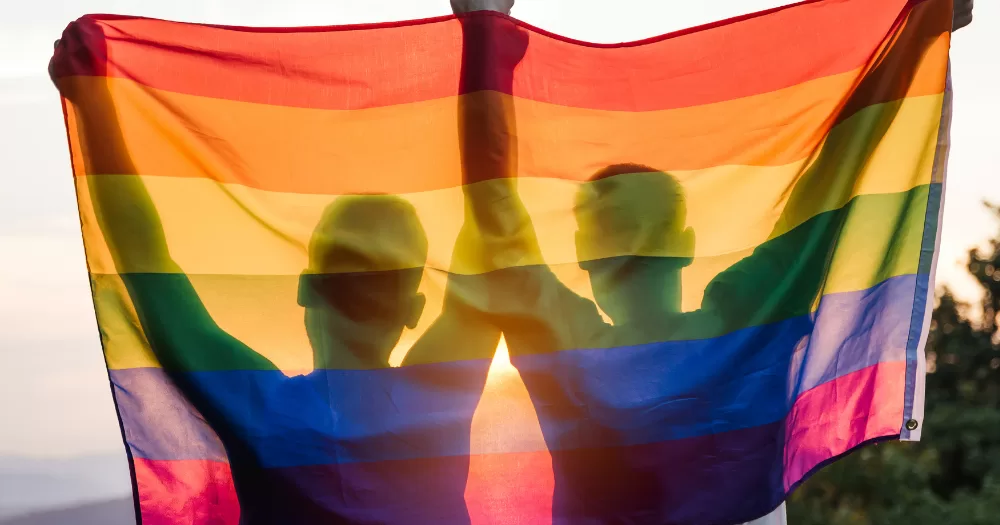
Below are a handful of words historically used as insults but which, over time, have been reinterpreted and reclaimed by the LGBTQ+ community, sometimes lovingly, sometimes controversially.
Can certain words once hurled at us now be used with affection? Social media proves daily that this is a conversation without an endpoint, full of passion, frustration, humour, and the ever-present swarm of trolls eager to weaponise language.
Names matter. Words have always mattered. Language is slippery and constantly evolving; it requires compassion, context, and a willingness to listen. For many LGBTQ+ people, terminology has been used as a means of control or humiliation. Reclaiming is, for some, an act of defiance and a source of empowerment.
Queer
Once used as a straightforward slur, “queer” became a political rallying cry in the ’90s during the AIDS epidemic. “We’re here, we’re queer” turned shame into visibility. Today, many young people embrace “queer” as a broad, inclusive term for identities that exist outside heterosexual and cisgender norms. Others still find the word painful, and that tension remains part of the larger linguistic landscape.
Twink
Typically describing a youthful gay man, “twink” is often considered more descriptive. It sits alongside community-specific labels like “bear,” now more associated with dating culture.
Queen
Perhaps the most famous example of reclamation, “queen” has shifted from insult to celebration. From drag culture to everyday slang, it’s now a word associated with power, confidence, and camp joy.
Dyke
Long recognised as a sharp-edged insult for lesbian and masculine-presenting women, “dyke” has been reclaimed proudly by many queer women. Still, for those who were abused with the term, it can carry lingering hurt.
Pansy and Fruit
Both historically used to belittle feminine men, these words have found new life as playful, self-aware descriptors among some gay men. “Fruity,” in particular, is often used tongue-in-cheek—though still best avoided when directed at strangers.
Fairy
Once another anti-gay taunt, “fairy” has been revitalised by the Radical Faerie movement and is now embraced as a symbol of spirituality, fluidity, and queer freedom.
Language is personal. Reclaimed words can be liberating for some in the LGBTQ+ community and wounding for others. Perhaps the most important rule is simple: listen first, speak with care, and let people define themselves on their own terms.
GCN’s wonderful Christmas Raffle is back! To be in with a chance of winning some fantastic prizes while also supporting GCN, buy a raffle ticket from as little as €5 at this link.
© 2025 GCN (Gay Community News). All rights reserved.
Support GCN
GCN is a free, vital resource for Ireland’s LGBTQ+ community since 1988.
GCN is a trading name of National LGBT Federation CLG, a registered charity - Charity Number: 20034580.
GCN relies on the generous support of the community and allies to sustain the crucial work that we do. Producing GCN is costly, and, in an industry which has been hugely impacted by rising costs, we need your support to help sustain and grow this vital resource.
Supporting GCN for as little as €1.99 per month will help us continue our work as Ireland’s free, independent LGBTQ+ media.