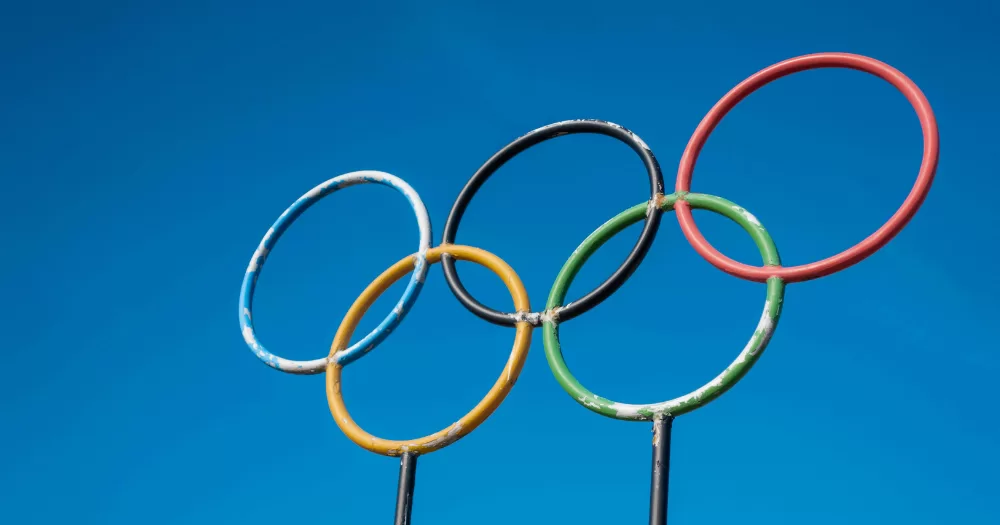
The International Olympic Committee (IOC) has announced that transgender women will be banned from competing in female Olympic events.
The ban follows a new policy released on Wednesday, March 26, and will be in effect for the 2028 Olympic Games, hosted in Los Angeles.
Under the new guidelines, all female athletes planning to compete in any women’s Olympic events will have to undergo an SRY genetic test to determine their eligibility, a test that medical experts have described as unreliable and reductive.
Athletes who test negative for the SRY gene can compete in female Olympic categories, while athletes who test positive will be deemed ineligible to compete in the women’s category.
As well as transgender and intersex athletes, athletes who have differences of sex development, including cisgender women, will also be affected under the new guidelines and may be banned from taking part in Olympic events.
In addition to the SRY genetic test, the new policy has effectively banned people who identify as transgender, intersex or with sex differences from taking part in female Olympic events going forward.
Furthermore, the new guidelines have been criticised for using “gender-critical” language and stating that trans women have biological advantages over cis women in sport, a claim that has been debunked on multiple occasions over the years.
A 2026 study published in the British Journal of Medicine has found that trans women have no physical advantage over their cisgender counterparts, particularly once they have been on hormone therapy for one year.
It is also worth noting that, to date, there has only been one openly transgender woman to compete in the Olympic Games, weightlifter Laurel Hubbard. Hubbard competed at the Tokyo Olympics in 2021, but she did not win a medal.
The decision by the International Olympic Committee has been met with widespread criticism, with over 100 human rights, sports, and scientific groups condemning it as “a blunt and discriminatory response that is not supported by science and violates international human rights law”.
The French Olympic Committee commented with a statement saying: “The SRY tests referred to raise major ethical and scientific concerns for all those affected.
“Practical difficulties also arise, particularly in France, where carrying out such tests would conflict with bioethics laws and the civil code, which currently prohibit their use in laboratories in the country.”
Human rights lawyer and former Olympic swimmer Nikki Hiltz also commented on the new guidelines in a social media post, “Y’all already know where I stand on this, but this policy is so f****** stupid and is not solving a problem that exists. I don’t know who needs to hear this but ZERO trans women competed in the Paris Olympics,” Hiltz wrote.
“Only ONE trans woman weightlifter competed in Tokyo 2021 and she did not win a medal. Can we please stop obsessing over trans people? And idk maybe focus our time, energy, and resources into real problems women’s sports face?”
Olympian Caster Semenya said, “If the IOC had truly listened — if President Coventry had done what evidence-based policy demands — this policy would not exist. It does not smell of science. It smells of stigma. It was not born from care for athletes. It was born from political pressure.
Following the announcement, TENI has issued a statement condemning the decision. The statement reads: “Yesterday the IOC announced that it is reintroducing genetic sex testing on all athletes in the women’s category, banning transgender and intersex athletes from the women’s category. This reinstates a practice previously ended by the IOC in 1996, which was then defined by the Committee as “scientifically and ethically unjustifiable.”
View this post on Instagram
“Just last month, United Nations human rights experts condemned mandatory genetic sex testing, rigid biological criteria, and the transparency of ongoing eligibility decisions within international sporting bodies. They warned that such measures undermine dignity, privacy, and equality of athletes.
“This regressive move from the IOC adds to a long history of surveillance, policing and control of the bodies of women, queer people, people of colour, disabled people and other marginalised communities.
“Protecting women’s sports” has long been used to restrict or remove Black women, trans women and intersex women from women’s sports. But who is being protected? Who benefits from the surveillance and control of women’s bodies?
“The IOC policy is only limited to athletes competing in the Olympics female category and while it has no immediate direct consequence on sports clubs, it risks cascading down to all levels, putting all women and girls at additional risk of scrutiny.
“Everyone deserves to be treated with respect and dignity, and to participate in sport equally, fairly and safely. Trans and intersex people are valued and welcomed members of sports clubs worldwide, and should continue to be a part of their sporting communities.
“TENI will continue to work with sports bodies and clubs around Ireland to ensure that sports are inclusive, safe, and fair for all. We want everyone to be able to head off to GAA, or soccer, or swimming and know that they’ll be accepted as part of that community, no matter who they are.”
© 2026 GCN (Gay Community News). All rights reserved.
Support GCN
GCN is a free, vital resource for Ireland’s LGBTQ+ community since 1988.
GCN is a trading name of National LGBT Federation CLG, a registered charity - Charity Number: 20034580.
GCN relies on the generous support of the community and allies to sustain the crucial work that we do. Producing GCN is costly, and, in an industry which has been hugely impacted by rising costs, we need your support to help sustain and grow this vital resource.
Supporting GCN for as little as €1.99 per month will help us continue our work as Ireland’s free, independent LGBTQ+ media.