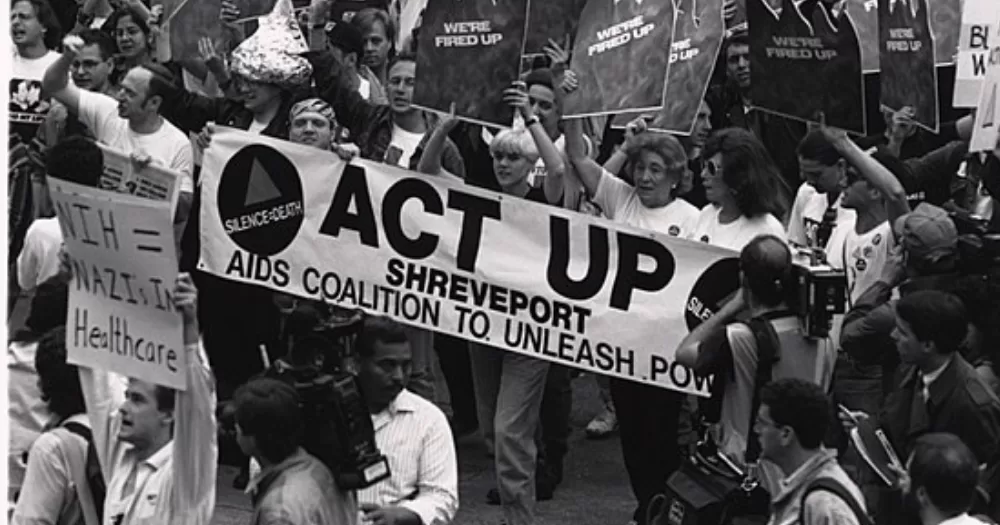
The AIDS Coalition to Unleash Power, otherwise known as ACT UP, emerged in 1987 at a point in history when the AIDS epidemic was at its height, a moment defined by fear, stigma and devastating loss. In the United States alone, tens of thousands had already died, while governments and institutions were widely perceived as slow, indifferent, or outright hostile. Out of this crisis came a new form of activism, one defined as unapologetic and impossible to ignore.
ACT UP was founded in New York City following a fiery speech by playwright and activist Larry Kramer at the Lesbian and Gay Community Services Centre. Frustrated by political inaction and what he saw as ineffective advocacy, Kramer called for a new organisation dedicated to direct action. Within days, over 300 people gathered to form ACT UP, united by a shared urgency: to end the AIDS crisis through protest, education, and political pressure.
Unlike earlier responses focused primarily on care and support, ACT UP embraced confrontation. Their tactics included marches, “die-ins,” and large-scale acts of civil disobedience designed to disrupt business as usual. One of their earliest demonstrations targeted Wall Street, protesting pharmaceutical profiteering and government neglect. Arrests were common, but so was media attention, an essential tool in forcing AIDS onto the public agenda.
View this post on Instagram
A defining moment came on October 11, 1988, during the “Seize Control of the FDA” protest at the Food and Drug Administration headquarters in Maryland. Around 1,500 activists gathered to demand faster drug approval processes and greater access to experimental treatments.
Images from the protest, particularly activist Peter Staley raising a “Silence = Death” banner, became iconic. Crucially, the demonstration worked: within a year, the FDA introduced reforms that accelerated drug development and expanded patient access.
ACT UP’s influence extended far beyond a single protest. The movement fundamentally changed how medical research was conducted, insisting that patients be included in decision-making processes. Activists became highly informed, often challenging experts on scientific and clinical grounds. Their efforts contributed to lower drug prices, improved trial designs, and faster approval timelines, changes that saved countless lives.
The movement quickly spread, with chapters forming across the United States and internationally. Cities such as Paris, Berlin and Dublin developed their own ACT UP groups, adapting the model to local contexts. In Ireland, a new ACT UP chapter was established in 2016, reflecting ongoing concerns about rising HIV diagnoses and persistent stigma.
Today, the global HIV landscape is vastly different. Effective treatments mean that many people with HIV live long, healthy lives. Yet ACT UP’s legacy remains vital. Inequality in access to care, social stigma, and gaps in prevention continue to challenge public health systems worldwide.
ACT UP made its mark in history; it demonstrated that a small, determined group of people could transform policy, science and public perception. Their message “Silence = Death” remains a powerful reminder that inaction has consequences, and that change often begins with those willing to demand it.
© 2026 GCN (Gay Community News). All rights reserved.
Support GCN
GCN is a free, vital resource for Ireland’s LGBTQ+ community since 1988.
GCN is a trading name of National LGBT Federation CLG, a registered charity - Charity Number: 20034580.
GCN relies on the generous support of the community and allies to sustain the crucial work that we do. Producing GCN is costly, and, in an industry which has been hugely impacted by rising costs, we need your support to help sustain and grow this vital resource.
Supporting GCN for as little as €1.99 per month will help us continue our work as Ireland’s free, independent LGBTQ+ media.