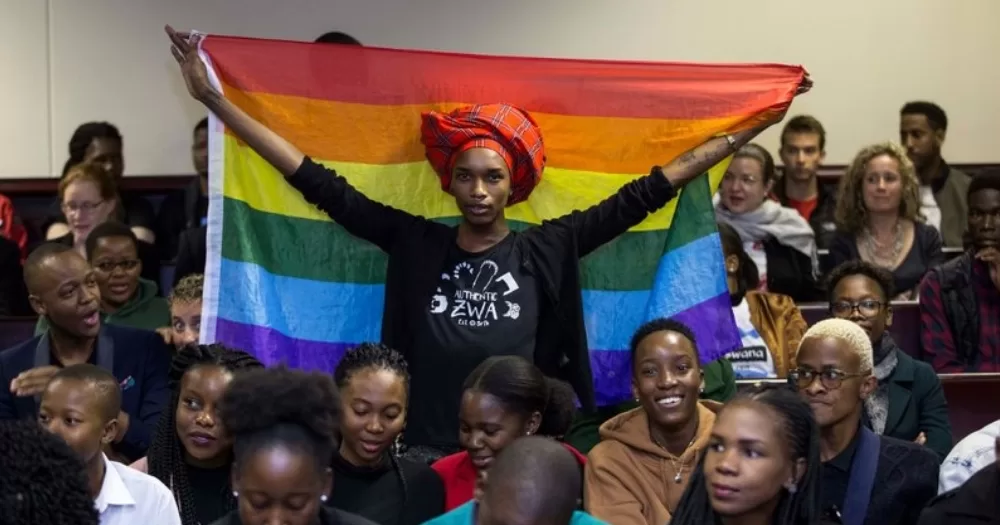
Botswana has officially repealed an anti-sodomy law, which was found unconstitutional by the country’s High Court in 2019. The removal has been hailed as a major victory by LGBTQ+ activists in the country.
Section 164 of the Penal Code criminalised anal or oral intercourse between people of the same sex, with sentences up to seven years in prison. While Botswana had historically been neutral towards queer identities, things changed when such provisions were introduced after the country became a British protectorate in the 19th century.
In 2019, the High Court of Botswana delivered a historic ruling, deeming the law unconstitutional. At the time, Judge Michael Leburu wrote: “Human dignity is harmed when minority groups are marginalised.
“Sexual orientation is not a fashion statement. It is an important attribute of one’s personality,” the judge continued. “Personal autonomy on matters of sexual preference and choice must, therefore, be respected. Any criminalization of love or finding fulfillment in love dilutes compassion and tolerance.”
The decision was appealed by the government, but Section 164 remained unenforceable after the appeal was rejected.
As reported by Mamba Online, on March 26 this year, the government of Botswana published a notice amending the Penal Code by deleting Section 164, officially repealing the anti-sodomy law. The change was carried out by Attorney General Dick Bayford, who only left the provisions prohibiting bestiality.
LGBTQ+ group LEGABIBO welcomed the repeal, saying: “For many, these provisions were not just words on paper – they were lived realities. They affected access to healthcare, safety, employment, and the freedom to love and exist openly.
“Even after being declared unconstitutional, their continued presence in the law has sustained stigma, justified discrimination, and contributed to fear, silence, and exclusion within our communities,” the group added.
LGBTQ+ people in Botswana have some rights protected, including being able to serve in the military and a ban on job discrimination on the basis of sexual orientation. Following a High Court ruling in 2017, trans people can also change their gender markers on government paperwork. A case has also been brought before the courts to legalise same-sex marriage.
© 2026 GCN (Gay Community News). All rights reserved.
Support GCN
GCN is a free, vital resource for Ireland’s LGBTQ+ community since 1988.
GCN is a trading name of National LGBT Federation CLG, a registered charity - Charity Number: 20034580.
GCN relies on the generous support of the community and allies to sustain the crucial work that we do. Producing GCN is costly, and, in an industry which has been hugely impacted by rising costs, we need your support to help sustain and grow this vital resource.
Supporting GCN for as little as €1.99 per month will help us continue our work as Ireland’s free, independent LGBTQ+ media.