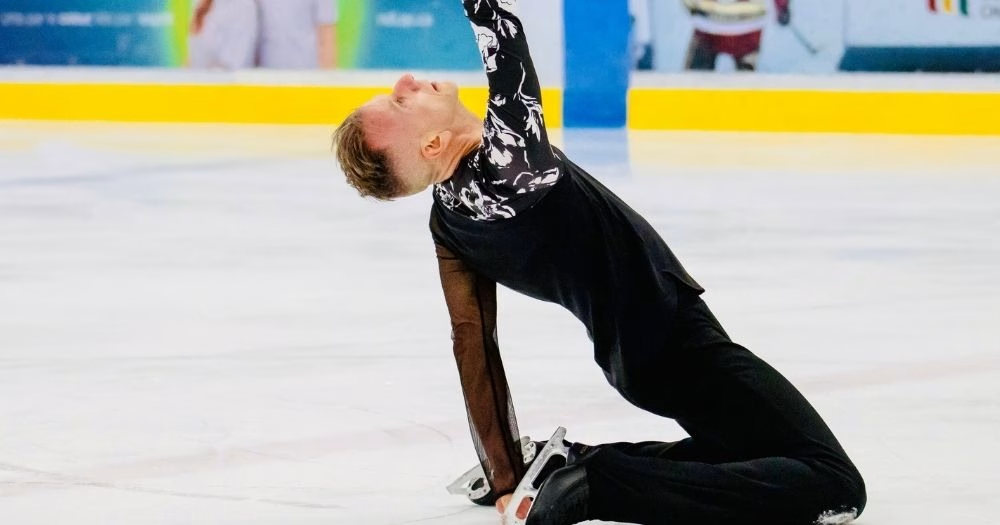
Figure skater Stef Vachon is returning to the Gay Games aged 57, heading to Valencia for the 2026 edition this June. A multiple gold medalist, the French-Canadian athlete has not competed since winning at the World Outgames in 2006.
Last year, he was diagnosed with fibromyalgia. Despite this, he has decided it is time to return to figure skating.
GCN had a chat with Stef to discuss how his career in figure skating has changed the course of his life, and why now is the time to return to the Gay Games.
How did you get into figure skating?
I first stepped on the ice when I was around six years old, like many kids in my neighbourhood. At the time, it was just something fun to try… but very quickly, at around eight years old, it became much more than that.
I remember entering a small club competition wearing hockey skates, simply skating around the rink, and somehow, I won. That moment changed everything for me. I fell in love with the feeling, the creativity, and the possibility of expressing myself on the ice.
What has figure skating offered you in your life?
Figure skating has given me many different things throughout my life, depending on where I was in my journey.
When I was a child, it was pure joy. It was where I felt confident, talented, and full of possibilities. It was a space where I didn’t feel different; I felt special. I was winning competitions, and everything pointed toward a strong future in the sport. From the outside, it looked like I was thriving.
But that moment also marked the beginning of something else. That’s when the homophobia, bullying, and abuse became a constant part of my life, especially in high school. The name-calling was relentless.
As my life became more difficult, skating also became something else. It became my escape. A place where, for a few minutes, I could forget everything I was going through. At the same time, it also became a place where I had to perform, hide, and protect myself. So it carried both sides of my reality, freedom and fear.
Over time, instead of continuing to grow, I started to lose myself. The joy I once felt on the ice began to disappear. I eventually made it to the national level in Canada, which should have been one of the proudest moments of my career. But by then, I was exhausted, emotionally and mentally.
At 17, I made the decision to quit competitive skating. Shortly after, I joined professional ice shows and started touring around the world. I thought that traveling, performing, and changing environments would finally make me happy.
I truly believed that leaving would free me from everything I was feeling. But it didn’t. I carried it all with me. No matter where I went, the same feelings of shame and unworthiness were still there.
But today, figure skating represents something entirely different. It has become a tool for healing. A way for me to reconnect with the little boy I used to be, the one who loved to move, to create, and to dream without fear.
Stepping back on the ice now feels like coming home. Not just to the sport but to myself. It’s no longer about performance or validation. It’s about presence. It’s about feeling. It’s about honoring my journey and everything I’ve been through.
And in a way, it has come full circle. What once helped me survive is now helping me live.
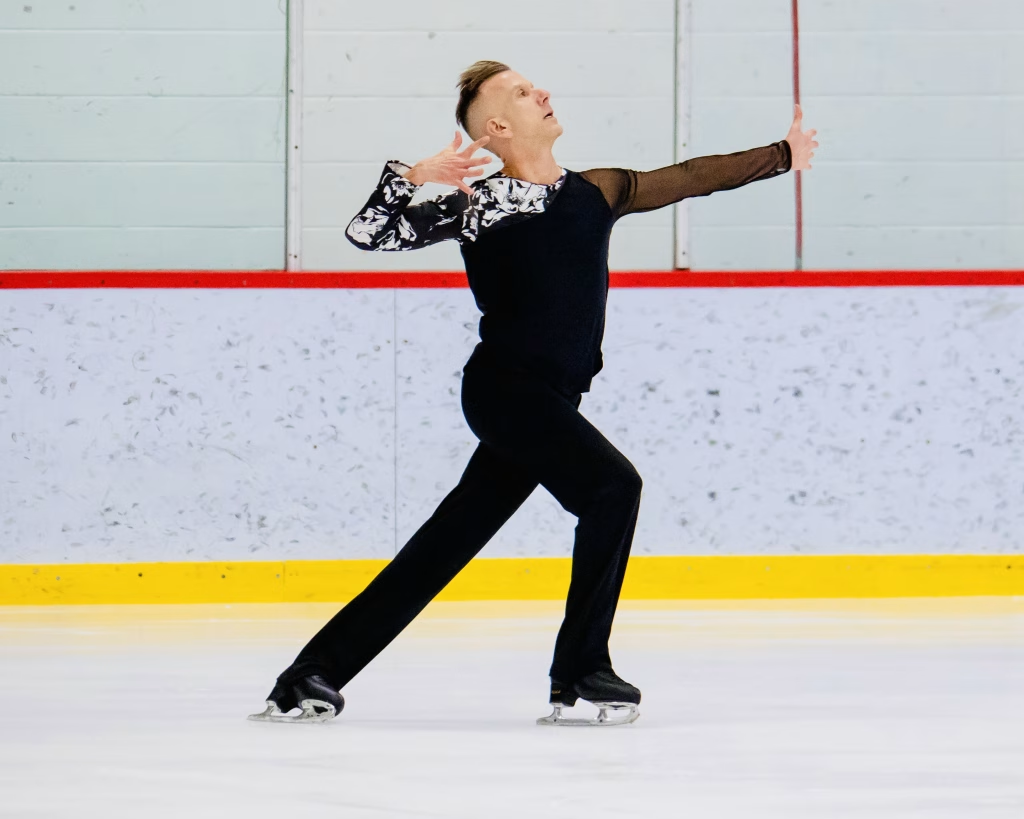
When did you first compete in the Gay Games and World Outgames, and can you tell us about your successes?
I first competed at the Gay Games in 1994 in New York, where I won two gold medals in figure skating. I won my first gold in my solo free skate and the second with Olympian Charles Sinek. Together, we made history as part of the very first same-sex figure skating competition.
I returned for the 1998 Gay Games in Amsterdam, which was a very different experience. The official figure skating competition was cancelled due to a conflict with the International Skating Union, which at the time did not recognize same-sex teams. Instead, the event was transformed into an exhibition format to protect the athletes. Even without medals, that experience became just as meaningful to me.
I performed both my solo free skate and in same-sex pairs with my partner Konstantin Mironov. We became known as the “silver couple,” and were even invited to perform on roller skates at the closing ceremonies in front of 50,000 people in the Amsterdam Arena, with the performance broadcast on Dutch television. It was absolutely unforgettable.
Later, I also competed at the World Outgames in 2006, in my city of Montreal, where I once again won two gold medals.
But beyond the results, the Gay Games truly changed my life. For the first time, I was surrounded by thousands of people from my community. I will never forget walking into the opening ceremonies in New York, that moment when I realized I was not alone. It gave me a sense of belonging, pride, and hope that I had never experienced before. The real victory was feeling seen, safe, and proud to be exactly who I am. It wasn’t just a competition. It was a turning point in my life.
Why is now the time to return to the Gay Games?
Because today, I am no longer skating from a place of survival, I am skating from a place of self-love.
Everything started to shift through my healing journey. I began reconnecting with who I truly am, learning to respect myself, to set boundaries, and to let go of the weight I had been carrying for so long.
And then, something very simple, but very powerful, happened: my son asked me to teach him how to skate. In that moment, something came back to life inside of me. Being on the ice with him brought me back to the little boy I used to be, the one who loved to move, to create, to dream, and to feel free.
Returning to the Gay Games in Valencia 2026 is not about proving anything to anyone. It’s about reconnecting with that part of myself and honoring the journey it took to find my way back.
It’s also about visibility. At 57, returning to competition sends a message that it’s never too late to reclaim who you are, and to start again, from a place that is healthier, stronger, and more grounded.
Today, I truly feel that I don’t have time to waste anymore. Life is too precious. For so long, I was surviving instead of living. Now, I want to fully experience it, to embrace every moment, and to do the things that truly matter to me.
This time, I’m not chasing validation, I’m celebrating my journey. And I’m finally living it, with pride.
What other ways do you engage with the LGBTQ+ community?
I am the creator and host of the Together Moving Forward podcast, where I share real, honest conversations about identity, healing, self-love, and resilience. I also invite guests from across the entire LGBTQ+ community around the world, sharing a wide range of lived experiences and perspectives.
I also developed my keynote, From Survival to Self-Love: How I Finally Learned to Embrace My LGBTQ Identity With Pride — And How You Can Too, where I openly share my journey, but also the tools and steps that helped me move from shame to self-love.
Today, everything I do is guided by one intention: to help someone, somewhere, feel less alone… and maybe begin their own journey toward self-love.
The work that Stef does and the inspirational attitude he has towards never giving up shows us all that it’s never too late to “reclaim who you are”. Stef Vachon will compete at the València Gay Games XII 2026, taking place from June 27 to July 4.
© 2026 GCN (Gay Community News). All rights reserved.
Support GCN
GCN is a free, vital resource for Ireland’s LGBTQ+ community since 1988.
GCN is a trading name of National LGBT Federation CLG, a registered charity - Charity Number: 20034580.
GCN relies on the generous support of the community and allies to sustain the crucial work that we do. Producing GCN is costly, and, in an industry which has been hugely impacted by rising costs, we need your support to help sustain and grow this vital resource.
Supporting GCN for as little as €1.99 per month will help us continue our work as Ireland’s free, independent LGBTQ+ media.