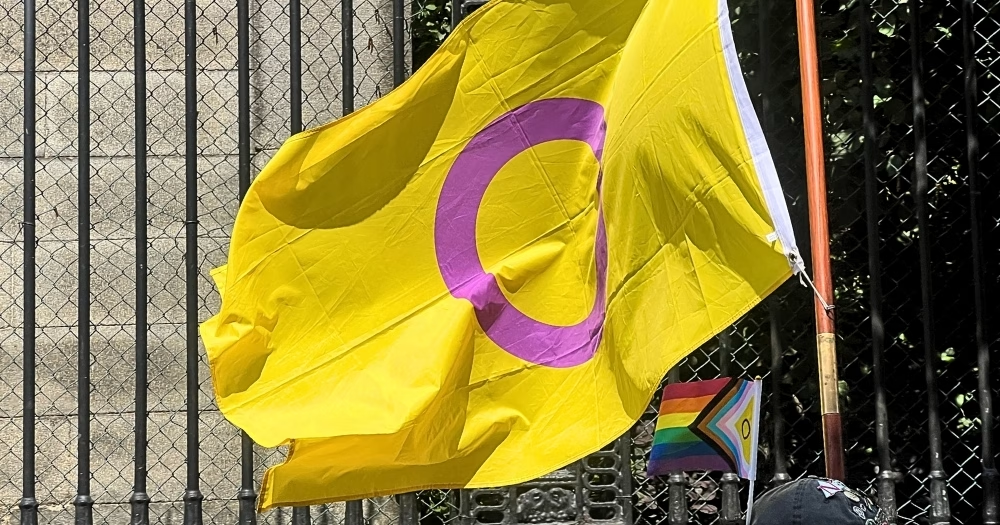
The Non-Binary and Intersex Recognition Bill 2026 is set to be debated in the Dáil on October 21. Ahead of the debate, activists came together to call on Irish lawmakers to pass the bill and establish protections for non-binary and intersex individuals in the country.
Introduced by Irish TD Ruth Coppinger, the bill seeks to expand Ireland’s legislation on gender recognition to include non-binary and intersex people. If signed into law, it will introduce the ability for a person to legally register their gender as non-binary using an ‘X’ marker through a gender recognition certificate.
It would also allow people born intersex to be registered as such in their birth certificates. Moreover, it will introduce legal protection from discrimination for people born with intersex characteristics.
The bill seeks to fill a long-standing gap in Ireland’s legal framework and give legal protections to some of the most marginalised groups in the LGBTQ+ community.
Speaking at a press conference ahead of the debate, Coppinger said: “Everyone should have the right to live as who they really are in this world. That right is being denied to non-binary and intersex people in their interactions with the Irish state and in society generally. They are forced into a rigid gender binary and face discrimination, erasure and harassment.”
Executive Director of TENI, Daire Dempsey, spoke about filling the gap that has existed in Irish legislation since the passage of the ground-breaking Gender Recognition Act in 2015. “The Government committed to reviewing non-binary recognition in 2019, and no progress has been made,” they said.
“For a decade, part of our community has been left in legal limbo, while other countries move ahead. This Bill seeks to address that, and bring Ireland in line with EU and international leaders. Everyone deserves to be recognised for who they are, to be able to move around the world safely and freely, and to be treated with respect.”
View this post on Instagram
Sorcha Ní Fhaoláin of Intersex Ireland also spoke in support of the bill, stating: “Recognition is an important part of addressing issues intersex people face as it is a step toward reducing stigma that keeps intersex people from being able to talk about our lives and our health with friends, family and even our doctors.”
Ní Fhaoláin continued, “There are other urgent issues such as ending harmful, irreversible, and non-consensual early intersex genital ‘normalising’ surgeries, providing adequate and appropriate healthcare for transgender people and improving Gender Recognition Act legislation, but this bill is an important step towards making life better for intersex people in Ireland.”
Cassandra Craig of Trans Healthcare Action echoed these words, saying: “In 2026, trans and intersex people in Ireland still lack true bodily autonomy and the right to self-determination in healthcare and social settings. This amendment to the gender recognition legislation will not solve these issues on its own, but it is still a vital piece of legislation which would make Ireland a beacon of hope for non-binary and intersex people, amidst a sea of hate.”
A full copy of the Non-Binary and Intersex Recognition Bill 2026 can be found here.
© 2026 GCN (Gay Community News). All rights reserved.
Support GCN
GCN is a free, vital resource for Ireland’s LGBTQ+ community since 1988.
GCN is a trading name of National LGBT Federation CLG, a registered charity - Charity Number: 20034580.
GCN relies on the generous support of the community and allies to sustain the crucial work that we do. Producing GCN is costly, and, in an industry which has been hugely impacted by rising costs, we need your support to help sustain and grow this vital resource.
Supporting GCN for as little as €1.99 per month will help us continue our work as Ireland’s free, independent LGBTQ+ media.