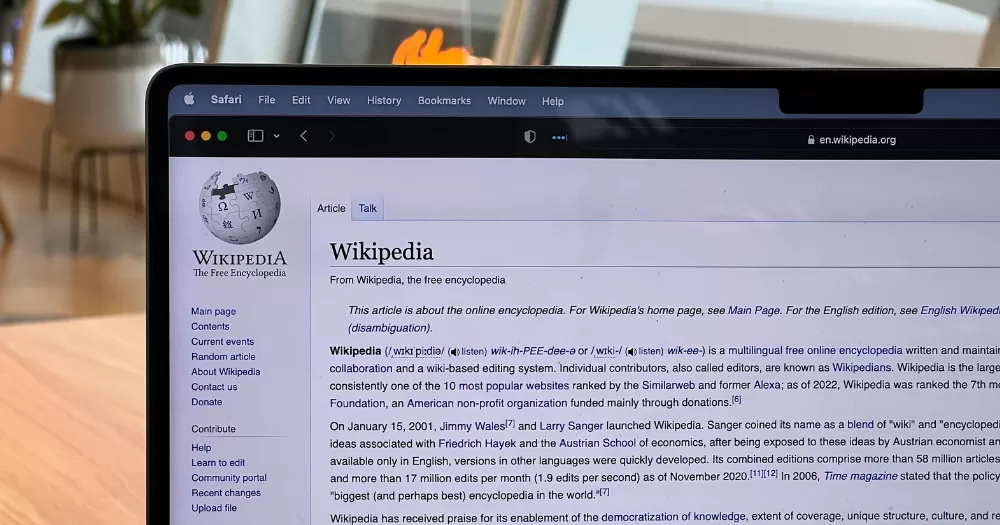
A University of California, Berkeley professor and her students are fighting back against the erasure of LGBTQ+ history by editing Wikipedia.
Since 2016, Juana María Rodríguez, a professor of ethnic studies, has incorporated Wikipedia assignments into her teaching. Over the past decade, students in her courses have created 63 new articles and edited hundreds more, contributing hundreds of thousands of words and thousands of citations, with a particular focus on queer and trans people of colour.
“Wikipedia is a public-facing project; it’s the largest encyclopedia in the world,” Rodríguez told UC Berkeley News in a December 2025 interview. “In a political moment where these histories are actively being erased from public view, having students work on a platform like Wikipedia becomes even more important.”
Working in partnership with the non-profit Wiki Education, Rodríguez’s students research and publish material drawn from reputable, verifiable sources. Their topics range from Mexican LGBTQ+ history and ballroom culture to sex worker movements and local queer life in San Francisco’s Chinatown.
“It becomes particularly important to document these subcultures within these communities,” she said. “Because it’s not just queer Latinas, it’s queer goth Latinas, it’s queer comics of colour, it’s African American slaying, right? It’s very specific topics that might really vary by region, by historical moment, and of course at different places around the world. Those topics, in Wikipedia and in real life, remain really under-studied and really under-researched.”
Rodríguez said the work has taken on new urgency. “Right now, the Trump administration is trying to erase the very existence of transgender people, so having information about those histories, as well as present challenges facing queer and trans communities, is particularly urgent,” she told The Daily Californian. “Queer and trans people have always been here, and adding that information to the world’s largest open access encyclopedia is one way to make sure that these stories remain available.”
By training students to contribute rigorously sourced scholarship to a global platform, Rodríguez believes they are not only developing critical research skills but also helping to preserve histories that might otherwise be sidelined or erased.
© 2026 GCN (Gay Community News). All rights reserved.
Support GCN
GCN is a free, vital resource for Ireland’s LGBTQ+ community since 1988.
GCN is a trading name of National LGBT Federation CLG, a registered charity - Charity Number: 20034580.
GCN relies on the generous support of the community and allies to sustain the crucial work that we do. Producing GCN is costly, and, in an industry which has been hugely impacted by rising costs, we need your support to help sustain and grow this vital resource.
Supporting GCN for as little as €1.99 per month will help us continue our work as Ireland’s free, independent LGBTQ+ media.