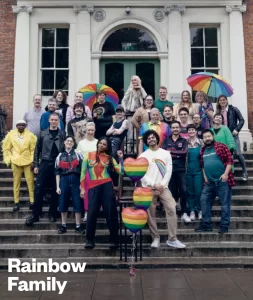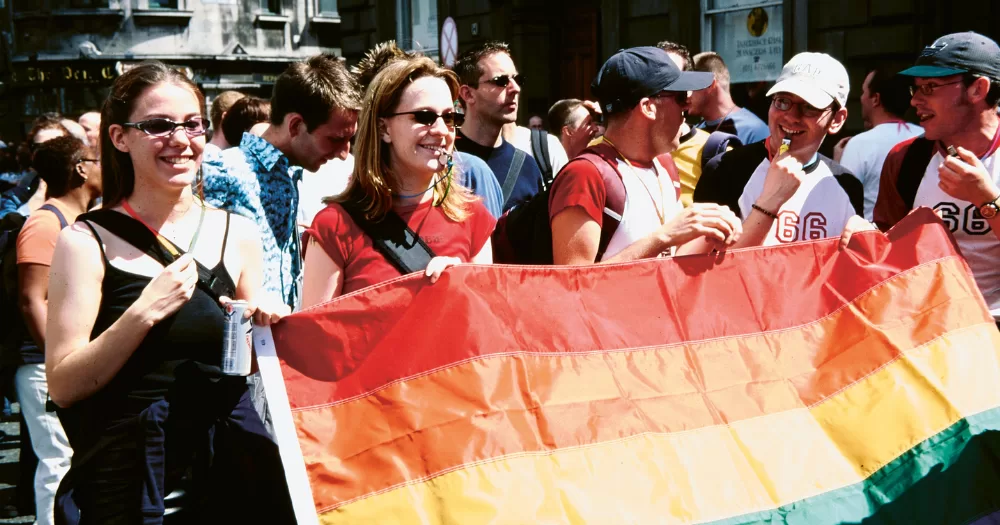
The Irish Queer Archive at the National Library is Ireland’s most extensive collection of LGBTQ+ materials. In GCN Issue 384, “Rainbow Family”, Shaun Lavelle, the Library’s Communications and Marketing Executive, describes just why this essential archive matters. All images courtesy of the Christopher Robson Collection, the National Library of Ireland.
“I had so much fun,” says a character in Russell T Davies’ series It’s A Sin as he lies dying from AIDS complications. “That’s what people will forget. How much fun it was.” It’s the most heartbreaking line in a gut-wrenching show. The foresight and certainty of that future tense – “will forget”.
As recently as the late 1980s, a queer person was all too aware of how unlikely it was that their full story would ever be heard. This character in It’s A Sin knows that so much of his life will be forgotten and erased, the lovers and friends, the parties and joys, and the resourcefulness of the LGBTQ+ community in the face of unprecedented challenges.
And how could they not be aware? For centuries, millennia even, queer history was a battle against being omitted and redacted. Our partners were “companions” or “roommates,” and gay men were “bachelors”. Women who loved women were “spinsters” or “lifelong friends”. We were always there, but this coded language kept us in the margins of Irish life.
That has finally begun to change, particularly in the last 10 years. Our stories aren’t just being told, they’re being recovered. For instance, the crucial role of queer women on the frontlines of the 1916 Rising and in the formation of our country, or the devastating effects of State persecution of sexual activity on gay men. The reason we’ve been able to recover our stories is because of archives.
In 2023, for instance, GCN made the first 10 years of its magazine free and accessible at archive.gcn.ie following its pledge in 2022 to digitise its print collection of over 300 issues.
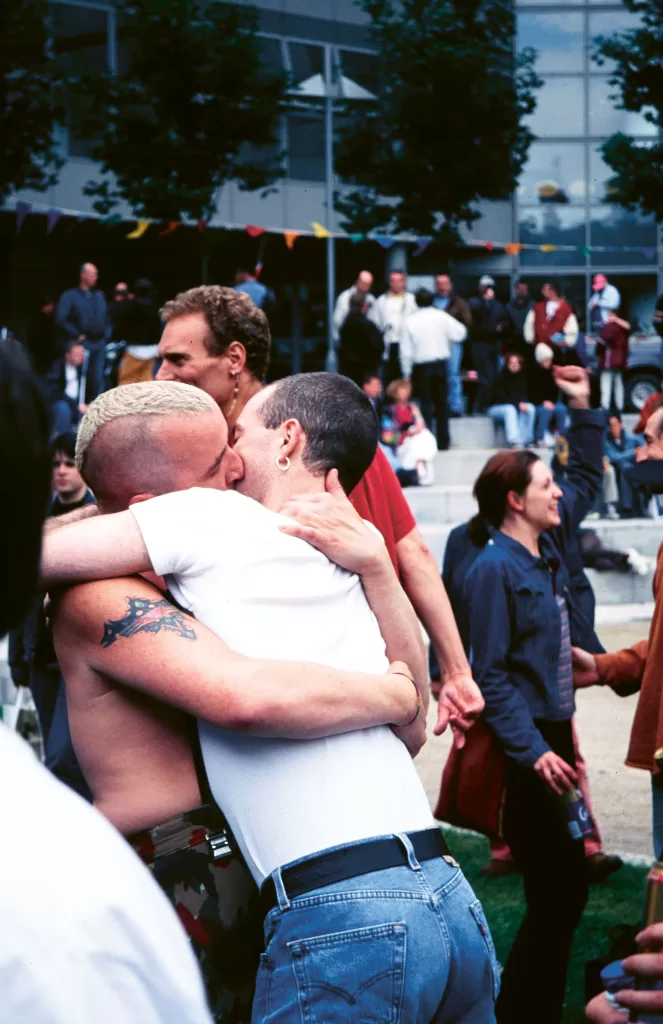
The Irish Queer Archive (IQA) here at the National Library of Ireland (NLI) is another example. It is Ireland’s most extensive collection of materials on LGBTQ+ studies, with around 250,000 press cuttings dating back to the late 1960s, a library with hundreds of international titles (the oldest being from the US in 1951), and nearly all Irish lesbian and gay publications since 1974. The archive also includes photographs, flyers, posters and other ephemera
From the 1980s onwards, a large group of people in the National LGBT Federation (NXF) had their eyes on the future. They refused to be forgotten or to stay in the margins. Against considerable challenges and with limited resources, they helped maintain and preserve documents and cuttings.
In 2008, the NXF donated the invaluable archive to the National Library of Ireland, which collects, protects and makes accessible the recorded memory of Ireland. Both the GCN Archive and the IQA are amazing resources for historians, researchers, journalists, and anyone with an interest in the LGBTQ+ community.
But the transfer of the IQA to the National Library of Ireland was about much more than research. It was also hugely symbolic. After so many decades of exclusion, the Irish State took ownership of our heritage and contribution to Irish society. In the words of Dr Audrey Whitty, Director of NLI, the transfer “expresses this national cultural institution’s commitment to tell the story of Ireland and all its citizens. The IQA speaks of a nation changed over the course of some decades to one that values equality, inclusion and justice.”
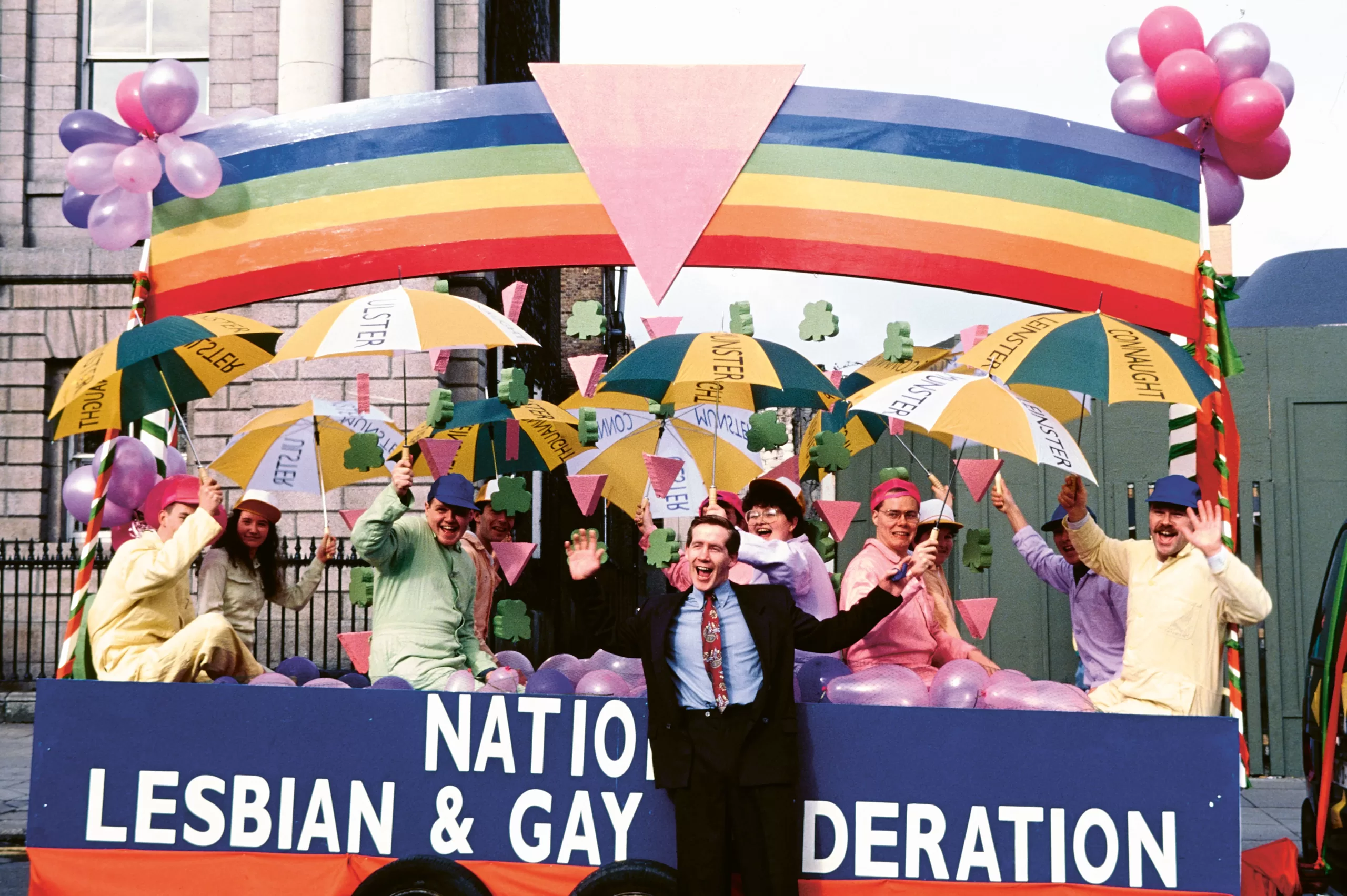
Queer activist and one of the founders of GCN, Tonie Walsh, was one of the key people involved in ensuring the Irish Queer Archive was preserved. The fact that this work was being done in the shadow of the AIDS epidemic, when the very existence of large parts of our community was being threatened, added extra resonance for Walsh: “As someone who lost half my friends to AIDS complications by the age of 37, preservation was critically important.”
He continues: “I was acutely aware of the need to document our output. Activists realised they had to keep an eye on the press to check for silences. The first Pride Parade, for instance, there was no mention in the press. We wanted to highlight the invisibility of LGBTQ+ life in our print and broadcast media and address homophobia and transphobia. We wanted to challenge lazy tropes around LGBTQ+ identity.”
As Walsh further points out, the significance of the Irish Queer Archive extends beyond our community: “The collection has become a template to other minority groups in civil society. They look at the IQA collection and wonder how a small group of people who were extremely repressed managed to find the human and economic resources to put this together and push it into the future, never fully knowing how it could be put to use.”
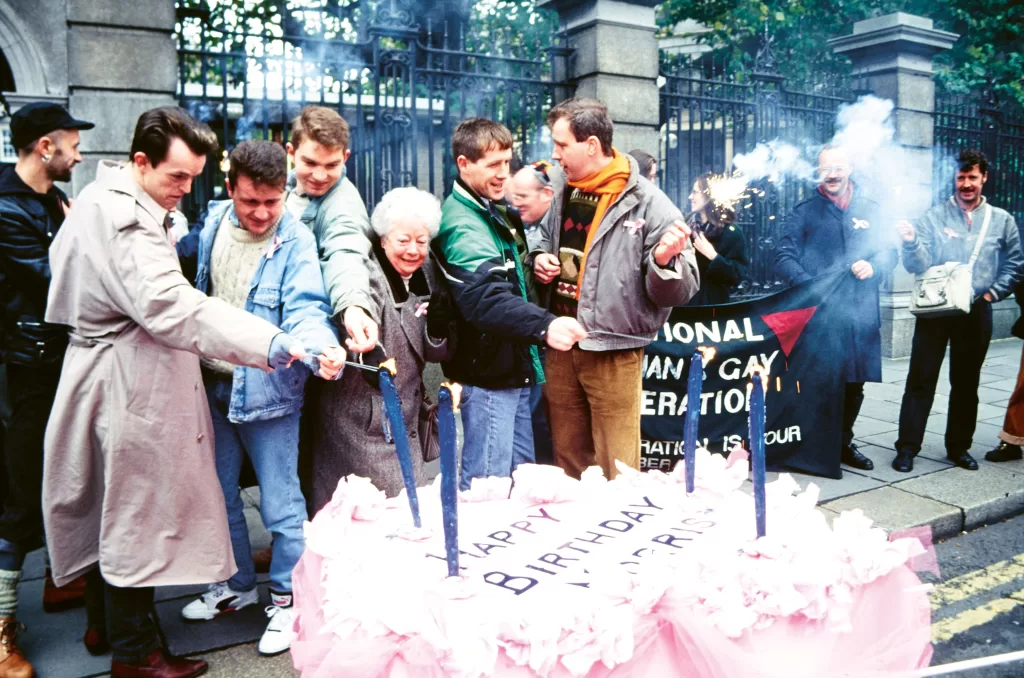
Given the size of the Irish Queer Archive, there is still work to be done in digitising the entire collection. But as Ireland’s primary memorykeeper, the National Library of Ireland is committed to ensuring that this significant cultural treasure is preserved and made accessible.
Why? Because the story of LGBTQ+ equality is the story of Ireland. In Walsh’s words, “We need to remind people of the hurt and exclusion before we got to the promised land. The people living hidden, horrible lives.”
Like that character in It’s A Sin, many queer people experienced the profound pain of having their existence erased. But their lives were so much more than that – they were stories of heroism and survival. The Irish Queer Archive is a testament to our strength and resilience as a community. It’s a reminder of how resilient we are when faced with adversity. At an event to mark the transfer, writer Colm Tóibín put it beautifully: “There is for [LGBTQ+] people all over the world a dotted line to the past which becomes faint and can disappear.”
Thanks to the Irish Queer Archive, that line is clearer so that the struggles and triumphs of LGBTQ+ people will not be forgotten.
The National Library of Ireland welcomes support to help continue their work preserving and making accessible the recorded memory of Ireland. Visit www.nli.ie/donate if you would like to make a contribution
© 2026 GCN (Gay Community News). All rights reserved.
This article was published in the print edition Issue No. 384 (June 1, 2024). Click here to read it now.
Support GCN
GCN is a free, vital resource for Ireland’s LGBTQ+ community since 1988.
GCN is a trading name of National LGBT Federation CLG, a registered charity - Charity Number: 20034580.
GCN relies on the generous support of the community and allies to sustain the crucial work that we do. Producing GCN is costly, and, in an industry which has been hugely impacted by rising costs, we need your support to help sustain and grow this vital resource.
Supporting GCN for as little as €1.99 per month will help us continue our work as Ireland’s free, independent LGBTQ+ media.