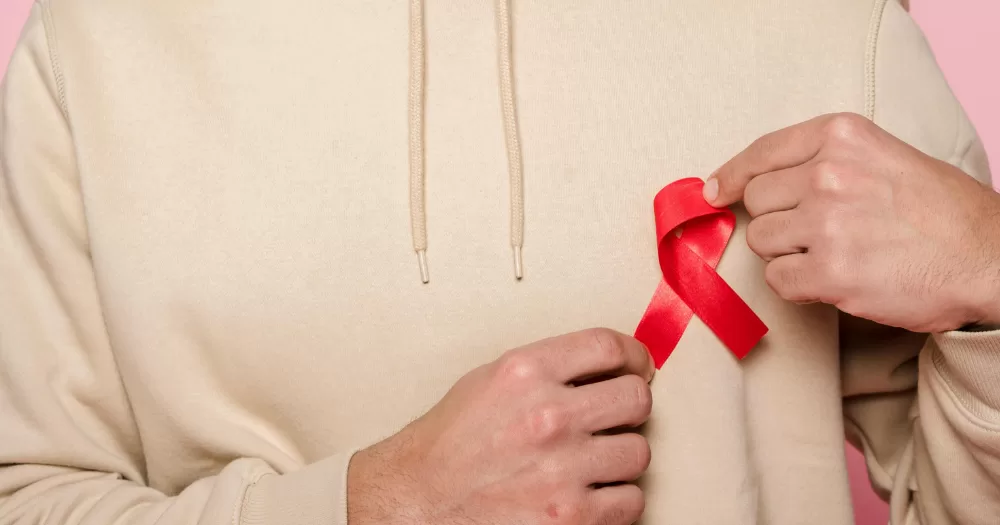
Sexual health services across Ireland are suffering from chronic underfunding and staffing shortages, according to Social Democrats TD Pádraig Rice, who has accused the Irish government of failing to properly support HIV prevention measures.
Deputy Rice, who also chairs the Oireachtas Health Committee, said progress made in reducing HIV transmission risks could stall unless urgent investment is provided for services such as PrEP. Speaking following a Health Committee meeting on sexual health services, he said frontline organisations and the HSE were attempting to deliver essential care despite severe resource constraints.
“At today’s Health Committee meeting on sexual health services, we heard that while the HSE and community organisations are doing great work to try to deliver services, they are doing so with one hand tied behind their backs because they are starved of funding and resources,” he shared.
Rice went on to explain that in 2019, the HSE commenced a national HIV PrEP programme. PrEP reduces the risk of transmission by preventing HIV from entering the body and making copies of itself. However, due to funding and resource constraints, this service has not been easily accessible.
Waiting times in Dublin can stretch to a year, while waiting lists in Limerick and Clare have been closed to new appointments entirely. Waterford currently has no PrEP service. As reported by The Journal, 809 people were on PrEP waiting lists in September 2025.
View this post on Instagram
Deputy Rice notes concerns on staffing gaps in HIV prevention services in Ireland: “At today’s committee, the HSE said that they requested 28 new staff for last year to meet demand for PrEP. However, just seven wholetime equivalents were provided in the 2025 National Service Plan. Not one of these staff was allocated to services outside of Dublin, in what the HSE described as the least worst way of deploying resources.”
According to the HSE, €700,000 was allocated to public PrEP and sexual health services under the 2025 service plan, an amount acknowledged as “substantially below what was requested”. The health service said an assessment identified Dublin as facing the most significant capacity pressures, leading to resources being concentrated there.
The concerns come amid rising HIV diagnosis rates in Ireland. A joint report by the European Centre for Disease Prevention and Control and WHO found Ireland recorded the second-highest HIV diagnosis rate in the European Union last year, with 18.8 cases per 100,000 people compared with an EU average of 5.3.
“It could be possible to end HIV transmissions in Ireland, but to get there, we need action, not just empty rhetoric,” Deputy Rice said.
© 2026 GCN (Gay Community News). All rights reserved.
Support GCN
GCN is a free, vital resource for Ireland’s LGBTQ+ community since 1988.
GCN is a trading name of National LGBT Federation CLG, a registered charity - Charity Number: 20034580.
GCN relies on the generous support of the community and allies to sustain the crucial work that we do. Producing GCN is costly, and, in an industry which has been hugely impacted by rising costs, we need your support to help sustain and grow this vital resource.
Supporting GCN for as little as €1.99 per month will help us continue our work as Ireland’s free, independent LGBTQ+ media.