Walking through West Hollywood today, there are countless places for people to dance. But before 1973, that wasn’t the case. Even the iconic Studio One, formerly known as The Factory, was a popular queer club that infamously turned away women and people of colour.
While in college at UCLA, Jewel Thais-Williams was exploring her sexuality, but wasn’t allowed in any of the clubs her white gay friends were going to. She was fed up with being stopped at the door for the colour of her skin and gender, and took matters into her own hands.
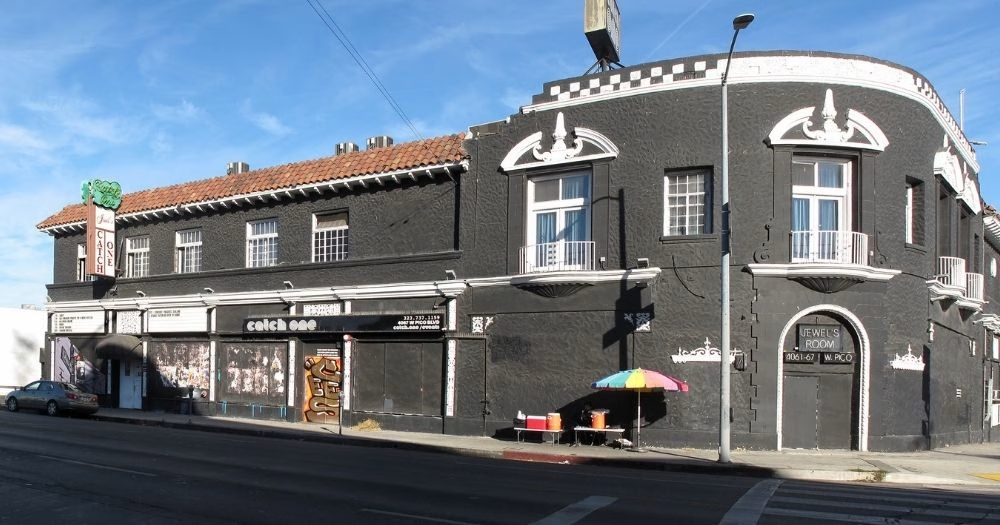
Thais-Williams made the drastic move to sell her clothing boutique and use all the money she had to purchase an old bar in LA’s Arlington Heights neighbourhood. By 1973, Jewel’s Catch One opened its doors to anyone in the queer community.
At first, Thais-Williams struggled to find people who would work for a Black woman, but she persisted and built her empire, which became a haven for Black queer folks. It didn’t take long before word spread, and in just a matter of years, Catch One was a premier nightlife spot in LA and known across the country.
Whitney Houston, Donna Summer and more all performed for the lively crowds Thais-Williams brought in. Madonna even held her Music album release party there in 2000. Celebrities like Janet Jackson went there to blend in with the crowd, revelling in the music. Thais-Williams also promised paparazzi wouldn’t find them there.
The club served the community in any way it could, also providing a safe space for gay men during the AIDs crisis. Thais-Williams made Catch One a place for men who had been ousted as a result of the illness to sleep, eat and feel safe and cared for.
Furthermore, in 2001, Thais-Williams founded Village Health Foundation, a non-profit focused on using acupuncture and other forms of integrative medicine to treat diseases that disproportionately affected the Black community.
Thais-Williams sold the club in 2015, but it remains open and continues her legacy following her death in 2025. Catch One is still the longest-running Black queer dance club, and Thais-Williams remains the first Black woman to own an LGBTQ+ nightclub in the US. She shaped the Black queer community in LA and arguably across the country.
Despite fighting through police raids, bigotry, and a crushing fire, Thais-Williams created a space that greatly surpassed the desire her young self had to simply go out and dance. It is largely because of her that queer dance clubs can be enjoyed by everyone across the world.
Her story is told through a documentary called Jewel’s Catch One, released in 2016 and available on Freestyle Digital Media. Check out the trailer below!
© 2026 GCN (Gay Community News). All rights reserved.
Support GCN
GCN is a free, vital resource for Ireland’s LGBTQ+ community since 1988.
GCN is a trading name of National LGBT Federation CLG, a registered charity - Charity Number: 20034580.
GCN relies on the generous support of the community and allies to sustain the crucial work that we do. Producing GCN is costly, and, in an industry which has been hugely impacted by rising costs, we need your support to help sustain and grow this vital resource.
Supporting GCN for as little as €1.99 per month will help us continue our work as Ireland’s free, independent LGBTQ+ media.